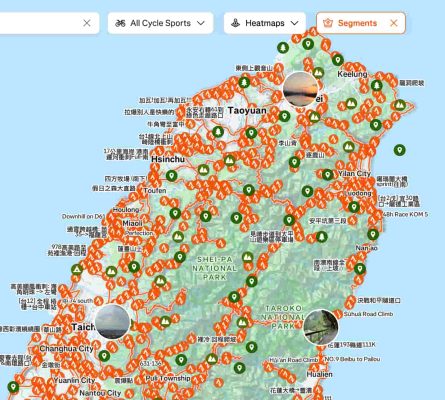
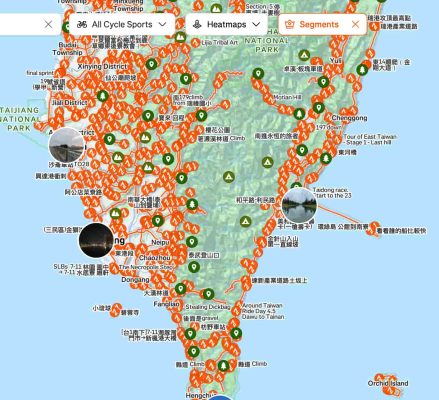
To see a nation at the speed of a bicycle is to engage in an act of intimate decryption. For Taiwan, a landmass defined by dizzying geographical compression and hard-won civic openness, the two wheels of a bicycle offer the ultimate tool to decode its unique reality.
To pedal across this rising island is to understand the profound double convergence of its destiny: just as four million years of violent tectonic collision have relentlessly compressed and thrust this geography upward, four hundred years of navigating the geopolitical squeezing of global empires have failed to crush its populace.
Instead, this continuous, crushing pressure has forged a crystalline marvel—beautifully complete, hyper-resilient, and defined by freedom. This transforms the ride in Taiwan from a mere journey into a powerful act of witness: an observation of how an open society, through the quiet resilience of its ordinary citizens, actively remakes pressure into freedom.
The Upward Landmass: Vertical Latitude on a Growing Island
持續長高的島嶼:垂直分布的緯度與氣候
Taiwan is arguably one of the most sublime destinations on Earth to explore by bicycle. Yet, before turning your wheels across the island, your senses must first adapt to the sheer tyranny of speed and slope.
台灣是世界上最適合用腳踏車探索的地方之一。但在開始探索台灣之前,你必須先習慣速度與坡度。
For over four million years, caught in the violent, ongoing collision between the Eurasian Plate and the Philippine Sea Plate, Taiwan has been relentlessly thrust upward—a landscape that continues to grow higher to this very day. This intense, repetitive orogeny has endowed the island with an astonishingly dense alpine geography.
Imagine a landmass no larger than the Netherlands or Belgium, yet packed with over 300 peaks surging past the 3,000-meter threshold.🔗
請想像一座面積與荷蘭或比利時差不多的島嶼,卻擁有 300 多座 3000 公尺級的高山。
Here, the horizon is never flat; in Taiwan’s outskirts, the distant skyline promises either a mountain ridge or a maritime expanse, offering the cyclist an immediate, visceral destination. On a global map, regions sharing Taiwan’s exact latitude are overwhelmingly defined by barren aridity—the hostile expanses of the Sahara, the Mexican, and the Arabian deserts.
Taiwan, however, stands as an anomalous emerald. Embraced by the warm, powerful currents of the Kuroshio flowing from the equator, and shaped by the dynamic interplay of monsoons, alpine topography, and oceanic moisture, the island enjoys a humid climate and a hyper-dense ecosystem, boasting a forest coverage rate of up to 60 percent. With a maximum elevation relief spanning nearly 4,000 meters, Taiwan condenses climate zones from tropical to subalpine into a single vertical axis, displaying a starkly stratified forest ecology.
While continental nations measure these dramatic scenic transitions in days of driving, Taiwan compresses them into mere hours of pedaling.
在大陸國家需要數天車程的地景轉換,在台灣,只在短短數小時之間。
The Compressed Miracle: A Small Island of Infinite Grandeur
被壓縮的地理奇蹟:台灣很小 但美麗很大
For the cyclist, this condensed topography offers an unparalleled experience found nowhere else on Earth. You can set off from the biting air of alpine tundras or subalpine hemlock forests, with a majestic mountain panorama unfolding beneath your feet.
Soon, you plunge into the temperate forests of mid-elevation. Because the island’s timberline reaches an astonishing 3,600 meters, you might catch glimpses through the thinning mist of giant, ancient canopies—the Formosan red cypresses, Hinoki cypresses, and Taiwanias,🔗 famously revered by Indigenous cultures as “the trees that touch the moon.”
As the descent transitions into a rhythm alternating between gentle glides and sweeping switchbacks, you enter the domain of broadleaf forests—a vibrant green treasure trove spanning elevations between 500 and 2,000 meters, which serves as a sanctuary for Formosan macaques, Reeve’s muntjacs, and pangolins.
Next, you might race into a deep gorge carved out by rushing torrents, before gliding past emerald-green rice paddies, small terraced vegetable gardens with bamboo trellises, and enigmatic aquaculture ponds farming species unknown to the passing traveler. Then, the scent of the sea catches up to you. Piercing through coastal windbreaks, a boundless expanse of azure opens up before your eyes, and the salt spray of the Pacific Ocean washes over your tires.
This is an epic odyssey powered entirely by human muscle—a journey that allows you to traverse multiple climate zones in a single afternoon. This island defines an almost impossible spatial density; here, the Earth collapses the distance between alpine wilderness and maritime infinity into a single, breathtaking descent. Or, of course, a grueling, breathless climb.
The Infinite Blue: Listening to the Rock-and-Roll of Peak and Coast
無限的藍:傾聽山巔到海邊的搖滾之歌
There is no finer manifestation of this compressed grandeur than the legendary trajectory from the peaks of Taroko Gorge down to the crescent shores of Chisingtan. This route is not merely a test of endurance; it is a live-action geological excavation.
The starting point lies near the alpine spine of the Central Mountain Range at Wuling, soaring 3,275 meters above sea level. This iconic ribbon of asphalt is the legendary battleground for the Taiwan KOM Challenge🔗, widely revered as one of the top ten most grueling hill-climb races on Earth. But while professional racers break themselves grinding upward to this summit, our journey takes the inverse route. Since this is an narrative for the broader public, we shall gratefully focus on the joy of the descent.
起點位於中央山脈的高山脊樑附近,海拔 3,275 公尺的武嶺,這條路線就是名列「全球十大最艱難單車登山路線」的台灣自行車登山王挑戰賽的經典賽道(Taiwan KOM, King of the Mountains)。但當然,我們的起點是選手們一路向上的終點,既然這是一篇面向大眾的文章,我們還是專注下坡就好。
Plunging from Wuling’s alpine heights down to the 500-meter mark, you cross the threshold into the heart of Taroko Gorge.🔗 Here, you are flanked by stunning, striated rock walls—sculpted by tectonic compression, metamorphic heat, and painted in varying shades of mineral gray. This is a chasm forged by the relentless, millennia-long erosive power of the Liwu River, whose glacial torrents rush below in a striking, mineral-rich jewel blue—a vibrant contrast born from suspended marble particles scattering the mountain sun.
Pedaling through this colossal gorge, a cyclist moves through a symphony of microclimates. Towering marble cliffs, rising hundreds of meters into the drifting mist, create a monochromatic cathedral of shadow and light, echoed by the roaring of this sapphire river and framed by a lush canopy of tangled ferns and broadleaf forests.
Then, the throat of the canyon suddenly opens. The crushing verticality of the mountains gives way to the horizontal relief of the East Coast.
隨後,峽谷的咽喉豁然開朗。群山的壓迫感退去,取而代之的是東海岸水平延伸的釋放感。
Within minutes, the sensory world changes entirely. The roaring echoes of the gorge are replaced by the rhythmic, deep wash of the Pacific tide. The pavement flattens, the air grows warm and coastal, and the rolling pebbles of Chisingtan produce a distinct, cascading rustle with each advancing and retreating wave. It is a sensory invitation to lie down on the beach and listen to their stories—a rock-and-roll anthem of their own journey from peak to coast, echoing the very descent you have just conquered.
Along Taiwan’s rugged eastern frontier, the mountains and the sea are eternally bound as one, and before you lies the infinite, absolute blue of the Pacific.
台灣東岸的山與海是一體的,而眼前的太平洋是無限的藍。
The Reclaimed Road: Pedaling the Road to Democratic Openness
奪回的道路:自由民主之路
This remarkable accessibility highlights a deeper truth about contemporary Taiwan: its geography, much like its democracy, belongs to the people.
這種驚人的可達性,也揭示了當代台灣更深層的核心:它的地理與它的民主一樣,都屬於人民。
In the mid-twentieth century, these steep mountain passes were engineered under a rigid, authoritarian continental logic—constructed as closed strategic redoubts, defensive fortresses, and military supply lines. Yet, as Taiwan pivoted toward the ocean and embraced democracy, the inherent gene of fluidity within the island’s veins completely dismantled this enclosed gravity.
Today, Taiwanese citizens have reclaimed these spaces. The state-led infrastructure that once symbolized martial control and continental defensive mindsets has been pedaled into a decentralized network of leisure, health, and ecological appreciation, fully open to free spirits. This is not merely a spatial repurposing; it is a profound physical manifestation where the Taiwanese people, through their own bodily mobility, have transformed authoritarian battle lines into oceanic highways of absolute freedom.
Among these, the Sun Moon Lake Cycling Path🔗 stands universally acclaimed as one of the world’s most breathtaking routes—a place tailored for leisurely pedaling, where the metrics of speed give way entirely to the majesty of the scenery.
例如日月潭自行車道,常被評為世界最美的路線之一,適合悠閒騎行,重點在風景,而不是速度。
To ride here is to practice freedom. It is an expression of an egalitarian culture where the road is shared equally by all, and where the preservation of nature is recognized as a collective right.
To be sure, while Taiwan has constructed an extensive network of dedicated cycling arteries, this collective act of road-sharing remains the most pervasive reality. A cautionary note for the traveler: along certain stretches, you will experience a distinctly local sense of exasperation—the chaotic ballet of roaring gravel trucks, or the rush-hour swarms of cars and scooters furiously vying for space.
Yet, even amid the exhaust, a profound, distinctly Taiwanese grace endures. For instance, when drivers and pedestrians encounter a cyclist embarking on a round-the-island journey, they will spontaneously shout words of encouragement, press a cold bottle of water into your hands, or share a morsel of their favorite local delicacy—an offering of pure civic pride.
This genuine human warmth, coupled with the nearly ubiquitous network of convenience stores and the vibrant landscape of local street food, transforms Taiwan into an unrepeatable pilgrimage for the global cyclist.
The Seamless Logistical Network: Convenience Stores, Street Food, and the Cycling Industry
無縫的後勤網絡:便利商店、街頭小吃、與自行車產業鏈
You may already know that pearl milk tea originated in Taiwan. The island not only produces world-class tea leaves, but its streets are tightly packed with custom shake-tea shops—a phenomenally dense market that forms a vital pillar of Taiwan’s thriving street food culture.
For the cyclist, this means that energy replenishment is never more than a few pedal strokes away and always full of surprise. From humble roadside stalls to sprawling night markets, food is a ubiquitous reality, offering an endless parade of culinary choices from the break of dawn until the dead of night.
And then there are the convenience stores. Taiwan’s convenience stores are next-level.
還有便利商店,台灣的便利商店完全是另一種境界。
Convenience stores are everywhere in Taiwan. Open 24/7, chains like 7-Eleven and FamilyMart are scattered throughout cities, towns, and the countryside. For riders, these stores are more than just pit stops; they offer seating areas, restroom facilities. You can even do things like picking up train and HSR tickets right at the counter.
Crucially, Taiwan is home to two of the world’s leading bicycle brands—Giant and Merida. This is not just a place to ride—it is one of the places where modern cycling is made. As a result, the entire ecosystem—buying, renting, and repairing bikes—is highly accessible and convenient.
And then there are the people. Taiwanese are widely known for being friendly and welcoming—especially in rural areas, in the mountains, and along the coast. Many are more than willing to help a cyclist in need.
更不用說,台灣人普遍非常友善、熱情,尤其在鄉間、山區、海邊,多數人都樂意為騎士伸出援手。
This is precisely why Taiwan is steadily emerging as a premier destination for global cycling tourism. Its dramatic topography, a meticulously planned trail network, and a deep-seated industrial foundation—reconfigured alongside the dynamic bedrock of democracy and freedom, an open and welcoming populace, the vibrant landscape of street food, and the multi-functional sanctuary of convenience stores—all converge and crystallize upon this single island.
It is this unique convergence that forms the very crystal of an open society, defining Taiwan as Taiwan, and rendering it an utterly indelible presence on the world map.
This land is still rising, a landscape co-defined alongside the free souls who inhabit it. Such an elevation is one that flat maps can never truly capture—but it is a height that you, having crossed this island, will deeply understand.