Taiwan A-Z
E – Economy: From 17th-Century Maritime Trade to the Frontiers of AI Power 經濟:從 17 世紀大航海時代的轉口港到全球 AI 算力最前線

Taiwan is not a large island, with a land area comparable to the Netherlands or Belgium, and over 70% of its terrain is mountainous. The land lacks significant mineral resources and does not produce oil.
台灣土地不大,與荷蘭、比利時的面積差不多,並且有超過 70% 的土地是山,缺乏重要礦產,腳下也沒有石油可挖。
Yet, ‘Made in Taiwan’ encompasses an extraordinary spectrum: from early exports of deerskin, camphor, and sugar, to a later era of canned pineapples, garments, sneakers, and Barbie dolls; transitioning next to radios, televisions, computers, and smartphones, and culminating today in the advanced semiconductor chips indispensable to artificial intelligence.
但「台灣製造」卻包羅萬象:從早期的鹿皮、樟腦、蔗糖,到中期的鳳梨罐頭、成衣、球鞋、芭比娃娃,再到收音機、電視機、電腦、手機,以及如今 AI 不可或缺的先進半導體晶片。
Indeed, ‘Made in Taiwan’ has become virtually synonymous with modern civilized life. Taiwan’s economic history is, in essence, a microcosm of the progress of modern global civilization—an enduring journey aligned with shifting geopolitical tides and deeply intertwined with the evolution of Taiwanese sovereignty and democracy.
「台灣製造」幾乎是現代文明生活的代名詞,台灣的經濟史,可說就是近代全球文明進步的縮影,並一路緊跟國際局勢,交織著台灣人的主權與民主的發展。
At the Margin of Empires, At the Center of the Ocean.
陸權的邊陲之島 海權的必爭之地
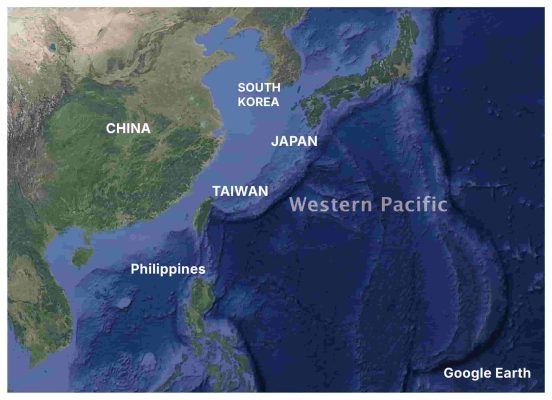
Situated at the heart of the First Island Chain [🔗] in the Western Pacific, Taiwan lies between the East Asian mainland and the Pacific Ocean. It is separated from China by the Taiwan Strait, with Japan to its northeast and the Philippines to its south.
台灣位在西太平洋第一島鏈的核心位置,介於東亞大陸與太平洋之間,與中國相隔一座台灣海峽,東北方是日本,往南是菲律賓。
Anthropological consensus establishes Taiwan as the foundational cradle of the Austronesian [🔗] diaspora. Beginning over five thousand years ago, successive waves of maritime voyagers initiated an epic global expansion from this island—radiating southward to Aotearoa (New Zealand), eastward to Rapa Nui (Easter Island) off the coast of South America, and westward to Madagascar along the eastern flank of Africa. This high-frequency maritime voyaging between Taiwan and Southeast Asia forged a vibrant, interconnected Austronesian cultural matrix.
根據語言學、考古學及生物學研究,台灣是整個南島語族全球擴張的初始震央與原鄉搖籃。自五千多年前開始,這座島嶼的先民便啟動了一場橫跨萬里的史詩級海洋遠征,陸續向全球擴散:向南深抵大洋洲的紐西蘭,向東跨越太平洋定錨至南美洲西岸的復活節島,向西則橫跨印度洋,直達非洲東岸的馬達加斯加島。這種在台灣與東南亞群島之間交織的頻繁海上往來,網羅成了巨大的南島語族文化矩陣。
Prior to the seventeenth century, Taiwan’s Indigenous peoples—encompassing both mountain-dwelling and plains (Pingpu) societies—sustained an egalitarian economic equilibrium anchored by hunting, fishing, foraging, and small-scale, regenerative agriculture. Their caloric baseline relied on resilient staple crops including foxtail millet, taro, sweet potatoes, pigeon peas, oil miscanthus, sorghum, and formosan red quinoa, while their high-value protein intake was secured through the systemic harvesting of Formosan sika deer, wild boars, Reeves’s muntjacs, and diverse marine resources.
在 17 世紀大航海時代破曉之前,台灣的南島民族(涵蓋所有高山與平埔社群)維繫著以狩獵、漁撈、採集與小規模定居農耕為基礎的生態平衡。常民社群的基礎熱量由小米、芋頭、地瓜、樹豆,以及具備高度環境韌性的油芒、高粱與紅藜所保障;高熱量的蛋白質來源,則仰賴對梅花鹿、野豬、山羌以及豐富海域魚貝類的永續採集。
Due to the barriers of mountainous terrain, the early Indigenous societies scattered across the island never formed a unified political authority capable of resisting external powers. Taiwan’s entry onto the stage of global economic history began in the 17th century, a pivotal node during the Age of Discovery. Situated precisely between the Ming Empire, the Ryukyu Islands of Japan, and the Philippine Archipelago, Taiwan became an indispensable transit hub linking maritime trade routes between Northeast and Southeast Asia, capturing the intense attention of European colonial empires.
但由於多山地形的阻隔,早期散居在島上的原住民社會,始終未能形成足以抵禦外來勢力的統一政權。台灣進入全球經濟舞台始於 17 世紀的大航海時代,因位處明帝國、日本琉球群島、菲律賓群島之間,是連接東北亞與東南亞航線的必經之地,成為歐洲殖民帝國爭奪的焦點。
In 1624, the Dutch East India Company (VOC) [🔗] landed in what is today’s Anping District of Tainan City, initiating a 38-year colonial tenure. They meticulously reconfigured Taiwan into a strategic commercial node linking mainland East Asia, Japan, and Southeast Asia, monopolizing the lucrative global transit of Chinese silk, Japanese silver, and imperial porcelain.
1624 年,荷蘭東印度公司(VOC)於今日的台南安平登陸,正式開啟在台灣長達 38 年的殖民統治。荷蘭人將這座島高度建制化,打造為串聯東亞大陸、日本與東南亞的跨國戰略貿易站,大量轉口絲綢、白銀與瓷器,扼住全球財富的咽喉。
To erect a strategic counterweight against Dutch hegemony in the south and to insulate their critical trade route between Manila and mainland East Asia, the Spanish Empire [🔗] deployed its Armada from the Philippines. Sailing northward from Manila, the Spanish fleet made landfall at Heping Island in Keelung in 1626, erecting fortified bastions there and subsequent strongholds in Tamsui.
西班牙帝國則為牽制盤據南台灣的荷蘭霸權,並保護馬尼拉與東亞大陸之間的黃金貿易航線,派出艦隊從菲律賓馬尼拉揮軍北上,於 1626 年在基隆和平島登島建城,並於淡水構築防禦碉堡,形成了與荷蘭人南北對峙的地緣格局。
The Spanish arrival introduced Catholic faith and early Western medicine to the island; within a short span, thousands of Indigenous inhabitants across Keelung, Tamsui, Guandu, and the Lanyang Plain were baptized into the Catholic Church. However, this formative chapter of Spanish Catholic governance came to an abrupt termination in 1642, when Dutch forces launched a northward expedition to forcefully expel the Spanish garrison and consolidate their control over the island.
西班牙人的進駐,為北台灣帶來了天主教信仰與早期的西方醫療體系與知識,在基隆、淡水、關渡及蘭陽平原一帶,曾有數千名南島原住民受洗成為亞洲最早的天主教徒。但這段短暫的西班牙天主教治理時期,並未演變為長期的國家法統,1642 年,荷蘭軍隊大舉北上,以武力驅逐了西班牙駐軍,結束了歐洲兩大強權早期在台灣的爭霸。
During this period, the Dutch fundamentally reshaped Taiwan’s ecological and economic landscape. To accelerate cultivation, the VOC imported water buffaloes from Indonesia and yellow cattle from Fujian and Guangdong of the Ming Empire [🔗] . They taught the indigenous Plains (Pingpu) tribes how to cultivate wet rice, introduced advanced sugar-refining techniques, and recruited large numbers of Han Chinese settlers to clear and till the land.
荷蘭人在這段期間,從根本上改變了台灣的生態與經濟地貌:從印尼引進水牛,從明帝國的福建、廣東引進黃牛,教導平埔族人種植水稻,引進製糖技術,並招募漢人來台灣開墾。
Crops from tropical regions such as Java—including peas, tomatoes, chili peppers, and guavas—were also introduced during this era. Consequently, Taiwan rapidly transitioned from a subsistence economy of foraging and hunting into a flourishing agricultural export center. The island began exporting cane sugar to the Ming Empire and Southeast Asia, while shipping massive quantities of sika deer pelts to Japan in exchange for silver bullion.
來自印尼爪哇等熱帶地區的豌豆、番茄、辣椒、番石榴等作物也在這時期引入,台灣迅速由原始的獵採自給經濟,過渡成為蓬勃發展的農業出口樞紐,出口蔗糖到明帝國與東南亞,將大量的梅花鹿皮銷往日本換取白銀。
As the primary administrative and mercantile nerve center of the Dutch East India Company (VOC), Taiwan became a bustling nexus where European merchants, Japanese traders, Han immigrants, and Southeast Asian mercenaries and enslaved laborers converged. Concurrently, the Spanish Armada brought an influx of Indigenous Filipinos, alongside a diverse global workforce of mercenaries, laborers, and enslaved people from Africa, India, Bengal, and Mexico to build and defend northern Taiwan’s fortifications.
作為荷蘭東印度公司的最高統治與貿易中樞,17 世紀的南台灣匯聚了歐洲商人、日本浪人、漢人移民,以及來自東南亞的傭兵與奴工。北台灣的西班牙無敵艦隊則帶來了大批菲律賓原住民,以及遠自非洲、印度、孟加拉與墨西哥的傭兵、勞工、奴隸,參與北台灣的要塞建設與軍事防務。
In this historic convergence, an intricate tapestry of diverse races and languages intersected on the island. Taiwan rapidly transcended its origin as an isolated tribal society of hunting and fishing, transforming instead into a strategic global pivot that harbored the distinct blueprint of a proto-cosmopolitan metropolis.
全球化的交會、多元的族群與語言在福爾摩沙碰撞交織,台灣從原本孤立的漁獵部落社會,在兩大歐洲海洋帝國的夾擊與催化下,成為一座具備國際都會雛形、與世界脈搏同步跳動的地緣樞紐。
It was during this defining era that foreign chroniclers began producing the first written registries of Formosan life, offering posterity an intimate window into the island’s early socio-economic reality. According to the 1672 logbook of Edward Barlow [🔗] —an English sailor who arrived in Taiwan aboard the merchant vessel Experiment—the island’s agrarian abundance was striking: ‘The island of Formosa yields very good beef, and plenty of pork, sheep, fowls, ducks, and geese. They kill many deer, salting and drying them, which keeps a long time and is very good provisions. They sow some small quantity of wheat, and great plenty of rice, which is their chiefest food.’
也是自大航海時代開始,西方觀測者首次以墨汁與文字,留下對福爾摩沙的實地觀察,讓我們得以一窺當時的常民生活。例如根據 1672 年隨英國商船「實驗號(Experiment)」抵達台灣的英籍水手巴洛(Edward Barlow)記述:「福爾摩沙島的糧食極其豐饒,擁有品質上乘的牛肉,以及大量的豬肉、羊、雞、鴨、鵝。當地人捕獲大量梅花鹿後,將其鹽漬並風乾,能長期保存,是相當出色的常備口糧。此地亦栽種少量的麥子,與產量極其巨大的稻米,是他們的核心主食。」
This first-hand maritime logbook serves as an empirical refutation of the Sinocentric historical narrative, which has long marginalized Taiwan as a ‘barren and savage frontier.’
這段第一手的航海日誌,也證實了當時的台灣物產豐饒,東寧王國並與大英帝國東印度公司簽約通商,絕非中原史觀所描述的「台灣是荒涼蠻夷之地」。
Against the backdrop of the Ming Empire’s maritime bans (Haijin) and the imperial government’s sheer inability to suppress them, a fierce wave of pirates emerged, driven by the pursuit of immense maritime trade profits. By the time of the Qing Empire, Zheng Chenggong (Koxinga)[🔗]—who had inherited the massive armed maritime forces of his father, Zheng Zhilong—frequently faced encirclement campaigns by Qing imperial forces at his coastal strongholds in Kinmen and Xiamen due to his rallying cry to ‘resist the Qing and restore the Ming.’
鄰近的明帝國,則在海禁政策與官府無力鎮壓的背景下,產生許多追逐龐大海上貿易利潤的海盜。到清帝國時期,繼承父親鄭芝龍龐大海上武裝勢力的鄭成功,因為打著「反清復明」的旗號,在其金廈根據地屢屢遭清政府派軍圍剿。
Facing intense military pressure, Zheng ultimately led his troops across the strait to Taiwan in 1661. After defeating and expelling the Dutch East India Company, he occupied the island and established the Kingdom of Tungning. This historical turning point marked the official entry and institutional rooting of Han culture in Taiwan.
鄭成功最終在 1661 年率兵逃來台灣,在擊敗荷蘭東印度公司後,佔據台灣建立起東寧王國,也標誌著漢文化正式進入台灣。
By then, Taiwan had already solidified its position as a critical maritime trade hub in East Asia, and export commerce became the absolute lifeblood of the Kingdom of Tungning’s finances. Operating under strict state-run monopolies, the regime exported Taiwanese sugar, rice, and salted deer hides to Japan in exchange for strategic military supplies such as copper, lead, weapons, and armor.
當時的台灣已是東亞重要的海上貿易據點,出口貿易也成為東寧王國最核心的財政命脈,由政府的商行壟斷經營。東寧政權將台灣的蔗糖、稻米與原住民採集的鹽漬風乾鹿皮輸往日本,換取日本的銅、鉛、兵器與盔甲等軍用物資。
The geopolitical dimension deepened dramatically in the 1670s when the kingdom executed a formal commercial treaty with the English East India Company (EIC)[🔗] , effectively transforming open trade into a transnational arms procurement network. Through its state merchant guilds, the regime bartered Taiwan’s premium sugarcane, deer pelts, and re-exported Chinese silk, tea, and porcelain—smuggled past the Qing Empire’s draconian embargo—to procure advanced English gunpowder, matchlock firearms, and raw strategic metals.
更具指標性的是,東寧王國於 1670 年代正式與英國東印度公司(EIC)簽署通商條約,將這場海洋貿易直接轉化為大宗的軍火採購密約。鄭氏政權透過官方商行,大量收購英國輸往台灣的黑火藥、火繩槍、戰略金屬與高價值香料,並以台灣品質上乘的蔗糖、鹿皮,以及突破清廷海禁走私而來的中國絲綢、茶葉與瓷器作為籌碼。
Concurrently, the regime levied heavy taxes on agricultural produce, fisheries, salt production, and import-export trade to sustain the massive military and administrative expenditures required for its mission to “resist the Qing and restore the Ming.” [🔗] Furthermore, despite the Qing Empire enforcing a draconian maritime embargo at the time, the Kingdom of Tungning successfully circumvented the blockade through agile maritime smuggling networks. Utilizing Xiamen and Hangzhou as covert transshipment hubs, the kingdom maintained high-frequency smuggling operations and commercial transactions with Qing Empire’s southeastern coast and Southeast Asia. This resilient, trade-driven shadow economy effectively sustained the regime’s survival and military operations for 22 years.
為維持「反清復明」的龐大軍政開支,東寧政府對農產、漁業、鹽業及進出口貿易課徵重稅,而儘管清帝國此時實施嚴格的海禁,東寧王國仍透過靈活的海上走私貿易,利用廈門、杭州作為轉運站,與清帝國東南沿海、東南亞進行走私與商業交易,維持了 22 年的政權運作。
However, the Kingdom of Tungning’s rallying cry to “resist the Qing and restore the Ming” inevitably drew the Qing Empire’s strategic focus onto Taiwan. Following the surrender of Zheng Keshuang in 1683, the island’s regime changed hands once again.
然而,打著「反清復明」旗號的鄭氏王朝,終究引來清帝國對台灣的注意。1683 年,鄭克塽降清,台灣的政權再次易主。
Because Beijing’s primary motive was merely to prevent remnant rebel forces from using Taiwan as a launchpad for future insurrections, the imperial court did not initially view Taiwan as an integral part of its sovereign territory. Instead, it was treated as a dangerous “frontier buffer” that required quarantine and isolation.
由於清帝國一開始只是為防止鄭氏政權殘餘勢力再次利用台灣反抗,雖然駐兵台灣,但不將台灣視為其正規領土,而是當作一個需要隔離的「邊疆」。
Consequently, the Qing court enforced strict maritime embargoes and “Taiwan Crossing Bans” (Dutai Jinling) for nearly two centuries. These restrictive border control policies severely curbed demographic and commercial expansion, forbidding Han Chinese settlers from bringing their families and tightly regulating access to the island.
結果就是,清帝國繼續實施了近 200 年的海禁政策和「渡台禁令」,這些限制性的邊境管理政策,遏制了台灣的人口與商業擴張,包括禁止漢人移民攜家帶眷,並嚴格管控進出這座島嶼。
Stripped of its former status as an autonomous maritime trade center, Taiwan’s economy during this period was deliberately constrained to a passive colonial appendage, primarily exporting cane sugar and rice back to the Qing Empire.
這段時期,台灣被剝奪了昔日作為自主海上貿易中心的地位,經濟方面被刻意限制為被動的殖民附庸,主要出口蔗糖、稻米到清帝國。
This century-long isolation finally broke in 1875, when the Qing court officially lifted the maritime and travel restrictions, triggering a massive influx of Han Chinese immigrants from Fujian and Guangdong. Following the forced opening of ports to foreign commerce, Taiwan’s economy aggressively re-integrated into global trade networks. Oolong and Pouchong teas, primarily cultivated in northern Taiwan, began selling heavily to European and American markets, alongside camphor harvested from the mid-to-northern mountainous regions. Driven by this export boom, Dadaocheng rapidly transformed into Taiwan’s second-largest commercial center, catalytic to a permanent shift of the island’s economic and political center of gravity from the south to the north.
直到 1875 年,清廷解除海禁,來自福建、廣東的漢人移民開始大量湧入台灣。隨著清廷被迫開港通商,台灣經濟以強勁的勢頭重新融入全球貿易網絡。主要產於北台灣的烏龍茶與包種茶,連同從中北部山區採集的樟腦,開始大量外銷至歐美市場。在這波出口熱潮的推動下,大稻埕迅速蛻變為全台第二大商業中心,進而催化了台灣的政經重心從南台灣轉向北台灣的永久性位移。
The Return to Maritime Networks and the Vanguard of Imperial Expansion 重返海洋帶來現代化 卻成為日本帝國擴張的起點
In 1895, following its defeat in the First Sino-Japanese War [🔗] , the Qing Empire ceded Taiwan to Japan as demanded by the Japanese government.
1895 年,清帝國在甲午戰爭戰敗後,應日本要求,將台灣永久割讓給日本。
The Japanese colonial government launched a comprehensive modernization of Taiwan’s infrastructure, implementing a census, land surveys, and the establishment of water supply systems, power grids, public health initiatives, and a modern transportation network. With the completion of the North-South Railway and the expansion of key ports in Keelung and Kaohsiung, Taiwan was pulled into the regional trade network. By the middle of Japanese rule, the island had shifted from a lagging, traditional society to a modernized economy.
日本殖民政府開始在台灣推動全面現代化的建設:人口調查、土地調查、自來水系統、電力系統、公共衛生體系、以及現代化的交通網絡。建設縱貫鐵路、擴建基隆港與高雄港,使台灣逐步融入區域貿易體系。到日治中期,台灣已從傳統落後的社會,轉型為具備現代經濟基礎的社會。
With the construction of irrigation facilities such as the Chianan Canal, Taiwan became a vital food and sugar production base for the Japanese Empire. Rice and sugar accounted for the vast majority of total exports, complemented by the export of tea, camphor, coal, timber, alcohol, bananas, and canned pineapples.
隨著嘉南大圳等水利設施的興建,台灣成為日本的糧食與製糖基地,稻米、砂糖佔總出口值的絕大部分,也出口茶葉、樟腦、煤炭、木材、酒精、香蕉、鳳梨罐頭。
Improvements in public health and medicine led to a sharp decline in Taiwan’s mortality rate. In 1906, the average life expectancy for a male infant was 27.7 years; by 1940, it had risen to 41.1 years. In contrast, the average life expectancy for males in China in 1942 was only about 33.8 years. Similarly, Taiwan’s population surged from 3.04 million in 1905 to 5.87 million by 1940. [🔗]
公共衛生與醫療的提升讓台灣的死亡率驟降。1906 年,台灣男嬰的平均餘命只有 27.7 歲,到 1940 年已增加至 41.1 歲。相比 1942 年的中國,男性平均壽命僅 33.8 歲。台灣人口也從 1905 年的 304 萬人,到 1940 年增加至 587 萬人。
As modernization and cities flourished, Western luxuries made their way to Taiwan through Japan, becoming the ultimate emblems of high society, fashion, and civilized life. Eyeglasses, watches, perfumes, soaps, cosmetics, Western fabrics, suits, dresses, leather shoes, books, magazines, records, and movies—all traveled from Europe to Kobe or Hong Kong, then onward to Taiwan. These foreign treasures left a lasting imprint on Taiwan’s consumer culture, defining the lifestyles of urban intellectuals and the wealthy elite.
隨著現代化與城市發展,西洋舶來品經由日本傳入,成為當時高級、摩登、文明生活的象徵。眼鏡、鐘錶、香水、香皂、化妝品、西式布料、西裝、洋裝、皮鞋、書籍、雜誌、唱片、電影等西方商品,從歐洲運抵日本神戶或香港,再轉運至台灣。這些進口商品深刻影響了台灣當時的消費文化,尤其是都市中的知識份子與富裕階層。
The 1934 commissioning of the Sun Moon Lake Hydroelectric Power Plant marked Taiwan’s formal entry into the industrial era by providing cheap, massive power. Yet, this shift was less about local prosperity and more about Japan’s strategic pivot to turn Taiwan from a ‘breadbasket’ into a ‘military logistics hub.’
1934 年,歷經多年興建的日月潭水力發電所正式完工運轉,開始提供龐大且廉價的電力,徹底打破了「農業台灣」的限制,台灣正式進入工業化時代。然而,這並非為繁榮台灣的經濟,而是為了配合日本軍部的戰略需求,將台灣從「糧倉」轉型為「軍需補給與重工業加工基地」。
In 1937, with Japan’s full-scale invasion of China, Taiwan entered a wartime system where all materials, factories, and labor were drafted for military extraction. A rigid rationing system took hold; essentials like sugar and salt became coupon-only commodities, forcing civilians to eat rice mixed with sweet potato and cassava.
1937 年,日本全面侵略中國,台灣也正式進入戰時體制,所有的物資、工廠與勞動力皆被納入軍事榨取。平民的生活進入嚴格的「配給配額制」,砂糖、食鹽、食油、醬油、蔬菜,都必須以對應的配給券才能購買,人民被迫重回以少量白米摻雜樹薯粉、番薯籤的日子。
As the state prioritized anhydrous alcohol for kamikaze planes and tanks, essential medical disinfectants and solvents for clinics were in short supply, bringing public health to the edge of collapse.
由於全台灣的酒精工場都必須生產軍用無水酒精,以作為飛機與戰車的替代燃料,導致當時的民間醫院、診所必備的醫療用消毒酒精、藥劑溶劑嚴重短缺,公共衛生環境與傳染病防治瀕臨崩潰。
As alcohol depots within sugar refineries were critical strategic assets for the Japanese air force, Allied bombers prioritized these facilities as primary targets during 1944–1945. These intense aerial campaigns destroyed vital factory infrastructure and inevitably spilled over into the bustling civilian settlements surrounding the refineries, resulting in heavy civilian casualties as entire neighborhoods were consumed by fire.
糖廠內的酒精儲槽是日軍戰機的生命線,美國與盟軍在 1944-1945 年將台灣各地的糖廠與酒精工廠列為頭號戰略轟炸目標。猛烈的空襲不僅炸毀了工廠設備,更波及了圍繞糖廠建立的繁榮街庄,造成無數台灣平民在火海中喪生。
Maritime Sovereignty Bypassed: Formosa Hijacked by China’s Civil War
與海洋國家擦肩而過:被中國內戰綁架的福爾摩沙
In August 1945, World War II came to a close after the U.S. dropped two atomic bombs on the Japanese mainland.
1945 年 8 月,美國在日本本土投下兩顆原子彈,日本投降,二戰結束。
However, Taiwan failed to catch the global wave of decolonization and independence sweeping [🔗] across other former colonies, permanently missing its historic window to emerge as an autonomous maritime nation. Instead, the people gathered at the Port of Keelung to welcome the arriving Nationalist (KMT) government from China.
然而,台灣卻沒有在當時加入殖民地的獨立浪潮,錯失成為海洋國家的機會,反而在基隆港迎接來自中國的國民黨政府。
As World War II concluded with Japan’s unconditional surrender to the Allied forces, mainland China bypassed any chance for recovery. The historical record quietly shatters the romanticized myth that ‘Chinese do not fight Chinese’—in reality, the continent immediately self-detonated into full-scale conflict, as the Chinese Communist Party and the Nationalist (KMT) Government locked themselves in a violent struggle for total dominion, igniting the Second Chinese Civil War. This self-inflicted continental inferno rapidly expanded outward, dragging an innocent Taiwan directly into a dark period of predatory resource extraction and financial asphyxiation.
隨著二戰結束與日本對盟軍無條件投降,此時的中國卻未走向休養生息。與所謂「中國人不打中國人」的敘事不同,中國內部隨即為爭奪權力展開了共產黨與國民政府的第二次國共內戰。這場東亞大陸的零和烽火,很快便化為地緣黑洞,強行將台灣拖進這場資源拔除與金融窒息的深淵。
Once more, Taiwan became a pawn, cannibalized by the Nationalist Government to fund its failing war machine.
台灣又一次,成為統治政權榨取資源,以支持其戰爭的來源。
The state forced locals to hand over rice, coal, and sugar at rock-bottom prices, only to ship these goods to Shanghai and sell them at a massive markup, pocketing windfall profits while leaving the island stripped of its wealth. Driven by economic suppression and spiraling hyperinflation, the period between 1946 and 1950 became the bleakest era of the 20th century for Taiwan. The 228 Massacre [🔗] of 1947 served as the pinnacle of this widespread social turmoil.
國民政府強制以低價收購台灣稻米、煤礦、砂糖,運到上海以高價賣出獲取暴利。經濟管制與惡性通膨,導致 1946 到 1950 年,成為台灣進入 20 世紀後經濟最黑暗的 5 年。1947 年的二二八事件更使社會的動盪不安達到頂點。
In June 1949, after the overprinting of currency spiraled completely out of control, the Nationalist government issued the New Taiwan Dollar to replace the old currency. Taiwanese citizens’ bank deposits of 40,000 Old Taiwan Dollars vanished instantly, becoming a mere one New Taiwan Dollar. [🔗]
1949 年 6 月,國民政府在超印台幣徹底失控後,發行新台幣取代舊台幣。台灣人存在銀行裡的 4 萬舊台幣存款,瞬間變為新台幣 1 元。
In December 1949, suffering a decisive and total defeat in the Chinese Civil War, President Chiang Kai-shek retreated his entire government and military to Taiwan, unleashing a draconian state of military martial law that would freeze the island for nearly forty years. Under this total control, the lives, livelihoods, properties, and fundamental freedoms of the Taiwanese people were left entirely to the mercy and absolute whim of a tyrannical regime.
1949 年 12 月,國民政府在國共內戰中徹底失敗,總統蔣介石將政府與軍隊撤退至台灣,開始在台灣展開長達近 40 年的軍事戒嚴,人民的生命、生計、財產、自由,全憑獨裁政府的一念之間。
Although the Nationalist government transported 2.97 million taels of gold from the Central Bank in Shanghai to Taiwan—worth approximately NT$8.32 billion at the time—it was surprisingly limited: if used entirely to buy rice, it could only cover 55% of Taiwan’s total annual rice production.
儘管國民政府撤退到台灣時,將上海中央銀行的 297 萬市兩、折合當時市價約 83.2 億新台幣的庫存黃金,運到台灣來由台灣銀行管理,但如果以全都拿來買米作換算,約只能買下當時台灣稻米一年生產總額的 55%。
At this juncture, Taiwan’s situation mirrored that of the 17th century under Koxinga. Just as Koxinga’s mission to ‘Overthrow the Qing and Restore the Ming’ ultimately provoked the Qing Empire to seize the island, Chiang Kai-shek’s retreat to Taiwan under the banner of ‘Retaking the Mainland’ led the Chinese Communist Party to believe it must conquer Taiwan.
此時台灣的處境,與 17 世紀鄭成功佔據台灣的情況類似。以「反清復明」為號召的鄭成功引來清帝國奪取這座島嶼,以「反攻大陸」為號召的蔣中正逃來台灣,也讓中國共產黨認為必須征服台灣。
As a result, government spending was almost entirely consumed by the goal of ‘Retaking the Mainland,’ leading to a massive fiscal deficit and a severe drain on foreign exchange reserves. Inflation continued to spiral; by the end of 1949, the annual inflation rate had skyrocketed to a staggering 2631%.
政府支出因此幾乎全用在「反攻大陸」,財政入不敷出,外匯嚴重流失,通膨仍在繼續,1949 年底,物價指數年增率高達 2631%。
At the time, the U.S. government believed that the corrupt ‘Soong-Kung-Chiang’ families had diverted American aid for private gain rather than for fighting Communism, concluding that further support for Chiang’s regime was a waste of resources.
當時的美國政府則認為,「蔣宋孔」家族的貪腐體制,將美國援助中華民國的資金用於私人利益,而非用在打擊共產黨,美國如繼續援助蔣政權將是浪費。
Consequently, President Harry Truman issued a public statement declaring that the United States had no intention of intervening in the Chinese Civil War, nor would it provide military aid or advice to the Nationalist government. This policy was also a strategic calculation to avoid pushing the CCP further into the arms of the Soviet Union.
時任美國總統杜魯門因此公開聲明,美國無意介入中國的內戰,也不對國民政府提供軍事援助與意見。這在當時也是避免美國因為介入,導致將中共推入蘇聯懷抱的判斷。
Return to the Ocean: The Free World’s Unsinkable Carrier and the Wind Over Deck from America
重回海洋:自由世界不沉的航母與美國強勁的甲板風
In 1950, the outbreak of the Korean War [🔗] fundamentally disrupted the Western alliance’s strategic paradigm. As Beijing executed a total tilt toward Moscow by entering the conflict, it shattered Washington’s original defense perimeter, which had explicitly excluded both Taiwan and South Korea from its Pacific security umbrella.
1950 年,韓戰全面爆發。由於中國共產黨悍然參戰,北京在戰略上全面倒向莫斯科,打破了美國原本將台灣與韓國排除在太平洋防衛圈之外的設想。
It was during this defining crisis that legendary U.S. General Douglas MacArthur, staring intently at the map, first crystallized Taiwan’s strategic value for the Free World, famously dubbing it ‘the unsinkable aircraft carrier.’ [🔗] He forcefully warned that should this pivotal node fall into Communist hands, it would instantly be weaponized as a ‘springboard for authoritarian expansion.’
也是在這個歷史時刻,美國二戰傳奇名將麥克阿瑟將軍凝視地圖,首次為台灣在自由世界的戰略位置定調——「不沉的航空母艦」,並警告若台灣落入共產黨手中,這座關鍵的戰略樞紐將成為「威權擴張的跳板」。
Driven by this geopolitical imperative, the United States formalized its grand containment strategy against communist expansion, constructing the ‘First Island Chain’ [🔗] —a critical maritime perimeter anchoring from Japan and the Ryukyu Islands, down through Taiwan and the Philippines, to the Greater Sunda Islands. This marked far more than a localized conflict; it was the formal crystallization of the global Cold War.
美國政府因此重新確立圍堵共產擴張的全球戰略,連線起日本、琉球群島、台灣,南至菲律賓與大巽他群島,正式築起一道「第一島鏈」鐵幕防線。這不只是一場區域戰爭,而是冷戰格局的正式成形。
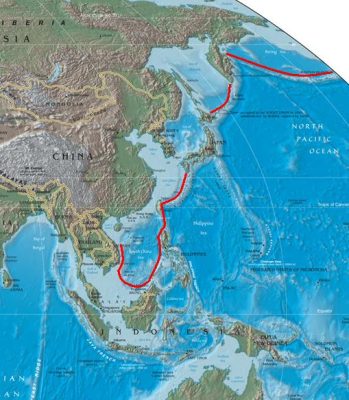
This transformation unleashed a monumental, historic turning point for Taiwan. Due to its pivotal location at the absolute core of the First Island Chain, Taiwan was instantly transformed from an abandoned outlier into a heavily supported and protected frontline of the Western alliance, serving as the vanguard against authoritarian expansion.
這對台灣來說是一個歷史性的結構逆轉。因為位在第一島鏈的核心位置,台灣從被放棄的邊緣,成為被美國支持與保護、圍堵極權擴張的最前線。
President Truman officially declared that the legal status of Taiwan was ‘undetermined.’ He stated that ‘the determination of the future status of Formosa must await the restoration of security in the Pacific, a peace settlement with Japan, or consideration by the United Nations.’ [🔗] In other words, the U.S. did not recognize Taiwan as part of China after WWII, thus preventing the CCP from claiming sovereignty over Taiwan based on the ‘succession of Chinese territory’ under international law.
杜魯門總統正式聲明,台灣地位未定,「福爾摩沙未來地位的決定,必須等待太平洋安全的恢復、對日和約的簽訂,或經由聯合國的考慮。」這意味美國不承認二戰後的台灣是中國的一部分,中共也因此不能以「繼承中國領土」為由,在國際法上主張對台灣擁有主權。
Subsequently, the U.S. dispatched the Seventh Fleet into the Taiwan Strait to protect this ‘post-war territory with an undetermined status’ and to implement the ‘Neutralization of the Taiwan Strait.’ [🔗]
美國並隨即派遣第七艦隊進入台灣海峽,保護「地位待定的戰後領土」,實施「海峽中立化」。
In 1951, the United States spearheaded the signing of the San Francisco Peace Treaty, [🔗] joined by representatives from 49 nations, including Japan. The treaty explicitly stated that ‘Japan renounces all right, title, and claim to Formosa and the Pescadores,’ yet it did not specify to which country sovereignty would be transferred. Subsequently, in 1954, the U.S. signed the Sino-American Mutual Defense Treaty with the ROC government, effectively recognizing Taiwan as a distinct political entity.
1951 年,包括日本在內的 49 個國家代表在美國主導下,簽訂《舊金山和約》,其中明訂「日本放棄對福爾摩沙及澎湖群島的一切權利、權利名義與要求」,但並未說明將主權移交給哪一個國家。美國並在 1954 年與中華民國政府簽訂《中美共同防禦條約》,實質上承認台灣是一個獨立的政治實體。
Occupying the absolute core of the First Island Chain, Taiwan experienced a historic re-alignment centuries after its initial entry into the Age of Sail. This time, propelled by the relentless ‘wind over deck’ engineered by American sea power, the island’s national security and macroeconomic infrastructure captured the ultimate aerodynamic lift, launching an era where Taiwan’s economic takeoff sailed heavily on the geopolitical winds of the Free World.
位居第一島鏈的核心位置,讓台灣在跨入大航海時代數百年後,再度迎來歷史性的重新對齊。這一次,有來自美國頂級海權領頭帶起的強勁「甲板風」動力,台灣的安全屏障與經濟,開始乘著這股自由世界的地緣信風,拔地而起。
Ultimately, the massive influx of U.S. aid became the absolute lifeline that prevented a total societal collapse, thoroughly breaking the back of the catastrophic hyperinflation. Bypassing the broke Nationalist authorities, Washington poured vital commodities directly into the dry supply chains of the Taiwanese market. Shipments of American wheat, raw cotton, soybeans, and chemical fertilizers arrived in a non-stop maritime pipeline, saturating the parched domestic market.
大量的美援挹注,扭轉了台灣當時災難性的惡性通貨膨脹,成為國民政府免於崩潰的關鍵。華盛頓當局繞過了蔣政府當局,直接將關鍵的民生物資傾注進台灣市場,美國的小麥、原棉、大豆與化學肥料源源不絕地填滿了幾近乾涸的供應鏈。
Through the sophisticated financial engineering of the “U.S. Aid Counterpart Fund”, the government successfully absorbed the rampant excess liquidity floating in the market. This structural mechanism instantly restored public confidence in the currency, firmly anchored the exchange value of the New Taiwan Dollar, and successfully forged a stable, unshakeable macroeconomic shield for the island’s subsequent industrial takeoff.
透過「美援公積金」(對等基金)的精密操作,蔣政權成功回收了市場上猖獗的過剩游資,重建了民間對貨幣的信心,穩定了新台幣的幣值,為隨後的經濟起飛奠定了一個穩固的總體經濟防護罩。
The United States did not merely station troops along the First Island Chain to establish a maritime security ring; it transformed this geopolitical barrier into a robust industrial chain and a global trade network.
美國不只在第一島鏈駐軍建立起軍事上的海權鏈,同時也將第一島鏈建成一條工業鏈、貿易鏈。
Dominated by labor-intensive light industries, the nation established an ‘Export Expansion‘ strategy to earn U.S. dollars, shipping massive quantities of garments to the American market. Simultaneously, as U.S. television and radio industries moved offshore, a wave of American and Japanese manufacturers set up electronics assembly plants in Taiwan, laying the essential groundwork for Taiwan’s future as a global technology hub.
台灣此時主要以勞力密集型的輕工業為主,並確立了「出口擴張」賺取美元的戰略,生產大量的成衣外銷到美國。同時因為美國電視機與收音機產業外移,大批美、日廠商來台設立電子零件組裝廠,成為日後台灣發展科技產業的基礎。
Daily necessities such as sugar, rice, canned pineapples, footwear, and plastic products were exported from Taiwan to every corner of the globe. During this era, Taiwan earned the title of the ‘Toy Kingdom,’ most notably as a major production hub for the iconic Barbie dolls. [🔗]
台灣的砂糖、稻米、鳳梨罐頭、塑膠製品、鞋子等民生用品也開始出口到全世界。台灣當時並有「玩具王國」的稱號,包括為美國公司生產經典的芭比娃娃。
During the U.S. Aid era spanning from 1950 to 1965, Taiwan’s economy weaponized this geopolitical leverage. Supported by American technology, capital infusion, market access, and umbrella military protection, Taiwan’s economy aggressively skyrocketed into a period of hyper-growth during the 1960s. This era of relentless export expansion permanently redefined the island’s industrial landscape.
1950 至 1965 年,在美國提供技術、資金、市場,以及軍事保護下,台灣經濟在 1960 年代進入高速成長期。這段毫不歇息的出口擴張時期,永久性地改寫了這座島嶼的產業地貌。
This period of export expansion and rapid growth drew Taiwanese women [🔗] out of their auxiliary roles in the traditional agrarian economy and into the workforce. By earning their own wages through their labor, the social status of women in Taiwan improved significantly.
這段出口擴張與高成長,也讓台灣女性從傳統農業經濟的協助角色,進入到工廠,靠自己的勞力擁有一份薪水,台灣女性的社會地位因此大幅提升。
As this wave of economic autonomy rippled from the factories into every corner of society, Taiwan’s landscape underwent profound qualitative changes. The traditional structure that relied on a lone male economic pillar was swiftly replaced by the burgeoning phenomenon of “dual-income families.” Fueled by urbanization and commercialization, the fierce resilience of Taiwanese women erupted onto broader commercial battlefields.
隨著這股經濟自主的浪潮從工廠蔓延到社會的每一個角落,台灣的地景也開始發生深刻的質變。原本以男性為唯一經濟支柱的傳統結構,迅速被蓬勃發展的「雙薪家庭」所取代。在都市化與商業化的推波助瀾下,台灣女性的強悍與韌性在更廣闊的商場上爆發。
Across alleyways and streets, countless food stalls, breakfast shops, and retail storefronts managed independently by women began to appear. They were both mothers and shrewd entrepreneurs; they raised their children while building their own economic kingdoms before boiling pots and ledger books.
大街小巷開始出現無數由女性獨當一面經營的小吃攤、早餐店與零售商號。她們既是母親,也是精明的老闆;她們一邊拉拔養大孩子,一邊在滾燙的油鍋與記帳本前,建立起屬於自己的經濟王國。
It was also during this period that Taiwan, along with South Korea, Hong Kong, and Singapore, was dubbed one of the ‘Four Asian Tigers’ by the media. This marked Taiwan’s first ‘economic takeoff’ and represented the historic crossover point where industrial output surpassed agricultural production for the first time.
也是這段時間開始,台灣與韓國、香港、新加坡被媒體並列為「亞洲四小龍」,這是台灣第一次「經濟起飛」,也是台灣的工業產值首度超越農業的交叉點。
Economic Governance over Ideological Myth: The Implicit Social Contract of Legitimacy with the People
拼經濟取代意識形態神話:統治正當性的契約
In 1971, on the eve of the UN General Assembly, the U.S. realized it could no longer prevent the PRC from joining the United Nations. Consequently, it proposed a compromise to Chiang Kai-shek, suggesting that the ROC remain in the UN under the name ‘Taiwan’ or ‘ROC Taiwan’ to distinguish it from the ‘China’ seat. Chiang, however, rejected the proposal.
1971 年,聯合國大會前夕,美國意識到無法再阻止中華人民共和國加入聯合國,因此向蔣介石提出折衷方案,包括建議中華民國改以「台灣」或「中華民國台灣」的名義留在聯合國,以區隔於「中國」席位之外,但被蔣介石拒絕。
The General Assembly subsequently passed Resolution 2758 [🔗], recognizing the PRC as the only legitimate representative of China and deciding to ‘expel forthwith the representatives of Chiang Kai-shek from the place which they unlawfully occupy at the United Nations.’
聯合國大會通過第 2758 號決議,決定中華人民共和國才能在聯合國中代表中國,並「立即把蔣介石的代表從它在聯合國組織及其所屬一切機構中所非法佔據的席位上驅逐出去」。
Following its eviction from the United Nations in 1971, the Republic of China lost its status as the “sole legal government of China” on the global stage. This monumental shift rendered the KMT’s core justification for its martial law regime—the vow to “recover the mainland”—increasingly vacuous, severely shaking the very foundations of its political legitimacy and authority to rule Taiwan.
中華民國在國際上失去了「唯一合法中國政府」的地位,這讓國民黨政權戒嚴統治台灣的理由「為了反攻大陸」顯得日益虛無,也對國民黨政權統治台灣的正當性與合法性產生了動搖。
Recognizing this crisis, Chiang Kai-shek’s son, Chiang Ching-kuo, realized that the KMT government had to prove its capacity to govern Taiwan effectively. To establish a new basis for legitimacy, the regime had to ensure that the people of Taiwan could lead better lives under its rule.
蔣介石的兒子蔣經國因此意識到,國民黨政府必須證明自己有能力治理好台灣,讓台灣人民在經濟上過好日子,以建立新的統治正當性。
In 1973, as the first global oil crisis erupted, the ROC government pushed against the tide by launching the ‘Ten Major Construction Projects.’ [🔗] The goal was to break the infrastructure bottlenecks caused by the high-speed growth of the 1960s, as the transportation facilities built during the Japanese colonial era had been pushed to their limits and could no longer handle the modern demand.
1973 年,全球爆發第一次石油危機,中華民國政府逆勢推出「十大建設」,以解決 1960 年代高速成長後造成的交通瓶頸。因為日治時期建設的交通設施一路用到現在,早已不堪負荷。
To reduce foreign dependence and achieve self-sufficiency in both economy and national defense—preparing for potential diplomatic blockades or severing of ties—the government decided to invest directly in establishing a complete heavy and chemical industrial system. This move allowed Taiwan to shift from being a mere importer to a domestic producer of raw materials. This shift supported the subsequent rise of the automotive, machinery, construction, and home appliance industries, empowering Taiwan with the capability for midstream mechanical processing.
同時為了減少對外依賴,實現經濟與國防上的自給自足,以應對隨時可能發生的外交封鎖或斷交潮,決定由政府直接投資,建立了完整的重化工業體系,讓台灣不再只是進口,而是可以自己生產原料。這支撐了後來的汽車、機械、建築、家電等產業,讓台灣具備發展中游機械加工的能力。
Although direct ‘U.S. Aid’ ended in 1965, the United States continued to back Taiwan’s Ten Major Construction Projects through loans and technical support. Led by the Export-Import Bank of the United States (Ex-Im Bank), massive financing was secured, alongside the provision of advanced American technology for heavy industries and nuclear power plants.
雖然美國在 1965 年停止了「美援」,但在台灣推動十大建設時,美國仍透過提供貸款與技術支持台灣。包括由美國進出口銀行領頭提供鉅額貸款,並在重工業與核電廠計畫提供美國先進的技術。
This sent a powerful signal to Taiwanese society and the business community: The United States has not abandoned Taiwan. This assurance was critical in maintaining investor confidence and preventing a catastrophic capital flight.
這對當時的台灣社會與企業界釋放了強烈信號:美國並未放棄台灣。對於維持投資台灣的信心、防止資本外逃至關重要。
The ‘Ten Major Construction Projects’ utilized government spending to stimulate private consumption and employment, successfully shielding Taiwan from the Great Depression triggered by the oil crisis. These projects also signified a fundamental shift in the ROC’s governing core on the island: transitioning from a ‘provisional regime intent on retaking the mainland’ to a ‘modern government committed to local development.’
十大建設透過政府支出拉動民間消費與就業,成功讓台灣避開了石油危機而起的全球經濟大蕭條。同時也標誌著,中華民國在台灣的統治核心,從「反攻大陸的臨時政權」 轉向 「致力於在地發展的現代政府」。
The diplomatic dead-end became the birthplace of Taiwan’s subjectivity. Losing the hollow prestige of the UN seat forced the regime to finally plant its roots. As ‘Building Taiwan’ replaced the rhetoric of ‘Retaking the Mainland,’ the KMT government effectively acknowledged that Taiwan was no longer a mere springboard for its ambitions.
外交的斷路,成為主體性的活路。失去了聯合國的虛位,反而迫使統治者「落地生根」。當「建設台灣」取代「反攻大陸」,國民黨政府其實是在用行動承認:台灣不再只是反攻大陸的跳板。
‘Building Taiwan and benefiting its people’ became a silent pact between the regime, the land, and its citizens—an admission that Taiwan itself was the true source of its governing legitimacy. This shift inadvertently cleared the ground for the seeds of Taiwanese identity to take root and grow.
「建設台灣、造福人民」成為政權與這塊土地與人民的無形契約——承認台灣才是其生存的正當性來源。這也為台灣主體意識的萌芽,清出了一塊生長的空間。
It was also during this era that Taiwan established ITRI (Industrial Technology Research Institute) [🔗] and the Hsinchu Science Park, exploring the possibilities of a high-tech economy through technical cooperation with the United States.
台灣也是在這個時期創立了工研院與新竹科學園區,透過與美國的技術合作,探索高科技經濟的可能性。
In 1976, ITRI, representing Taiwan, signed a 10-year, $3.5 million contract with the American corporation RCA, consisting of $2.5 million for technology transfer and $1.0 million in licensing fees.
1976 年,工研院代表台灣與美國 RCA 公司簽署了一份為期 10 年、總額 350 萬美元的合約,其中包含 250 萬美元的技術移轉費與 100 萬美元的技術授權金。
In an era when Taiwan’s per capita annual income was under $400, this massive expenditure was an extraordinary national bet—one that later spun off UMC [🔗] in 1980 and TSMC [🔗] in 1987. The seeds planted back then have blossomed today into a sprawling, fully integrated semiconductor ecosystem—firmly dictating the pulse of global technology.
在那個台灣國民平均年所得不到 400 美元的年代,這筆龐大的費用無疑是一場非比尋常的國家豪賭。之後並分別於 1980 年衍生出聯電、於 1987 年衍生出台積電。當初播下的種子,如今並已長成一座半導體生態鏈完整的繁茂森林,主導著全球科技的脈搏。
Yet, Taiwan’s geopolitical gambles were not flawless streaks of unmitigated success. During the 1970s and 1980s, Taipei attempted to forcefully engineer a domestic automotive industry by weaponizing protectionist barriers—hiking import tariffs to a staggering 75% and enacting the Regulations for the Promotion of the Automobile Industry. However, the automotive sector demands massive transnational economies of scale, a landscape already fiercely dominated by American giants like Ford and General Motors. The Taiwanese government’s ambitious “Grand Auto Plant” initiative—a joint venture designed with Japan’s Toyota to forge an export-oriented automotive powerhouse—ultimately collapsed when Toyota staunchly refused to transfer its proprietary core engine technologies.
然而,台灣的地緣政治豪賭並非每投必中。在 1970 至 1980 年代,台灣曾試圖透過保護主義壁壘強行拉起本土汽車工業——將進口車關稅提高至驚人的 75%,並頒布《促進汽車工業經營方案》,試圖扶植本土車廠。但因為汽車是高度跨國規模經濟的產業,美國已有福特、通用等巨頭,台灣政府試圖與日本豐田合資建立以出口為導向的「大汽車廠」計畫,也因爲豐田拒絕轉移其核心引擎與底盤專利技術後,徹底宣告潰敗。
This strategic failure underscored a brutal economic reality: industrial sovereignty cannot be fabricated through authoritarian decree or tariff walls alone. While the automotive gamble attempted to trap the island within a rigid, continental-style reliance on domestic scale, the semiconductor ascension succeeded precisely because it bypassed protectionism entirely, embracing an agile, maritime division of labor that plugged directly into the global democratic supply chain.
這場戰略挫敗也揭示了殘酷的經濟現實:產業主權無法單靠威權體制的行政命令或關稅高牆憑空製造。當年的汽車工業豪賭,試圖將這座島嶼鎖在依賴龐大內需市場與封閉供應鏈的陸權死胡同裡。相反地,台灣半導體產業之所以能成功,正是因為它徹底屏棄了保護主義,選擇擁抱敏捷的海洋型民主分工鏈,直接對接全球供應鏈。
Intertwined Freedoms: Transnational Supply Chains Driving Democratic Breakthrough and Capital Explosion 自由的連鎖效應:跨國供應鏈推動民主解嚴帶動資本全面噴發
Since the Korean War, the United States has played a pivotal role in Taiwan’s economic development, national defense, and even in catalyzing human rights and democratization.
美國自韓戰後,持續對台灣的經濟發展、國防安全、甚至維護人權與民主化的催生,都扮演重要角色。
Although the United States severed diplomatic ties with the ROC in 1979 to establish relations with the PRC, the U.S. Congress promptly passed the Taiwan Relations Act (TRA).[🔗] This act explicitly authorized the U.S. government to provide defensive weaponry to Taiwan to resist any annexation intent from China. Furthermore, the TRA incorporated human rights into its policy concerns, even linking arms sales to the human rights conditions in Taiwan.
美國雖然在 1979 年與中華民國斷交,轉與中華人民共和國建交,但美國國會隨即通過《台灣關係法》,明確授權美國政府提供防禦性武器給台灣,以抵抗中國的併吞意圖。《台灣關係法》並將人權納入對台灣政府的政策關切,甚至將軍售與台灣人的人權狀況連動。
As the 1980s arrived, Japan—also situated on theFirst Island Chain—had completed its industrial upgrade and began moving labor-intensive industries to lower-cost regions. Following the Plaza Accord, the sharp appreciation of the Yen against the Dollar made ‘Made in Japan’ products significantly more expensive on the international market.
時間來到 1980 年代,同樣位於第一島鏈的日本已完成產業升級,開始將勞力密集產業外移至成本更低的地區。加上廣場協議後,日圓對美元大幅升值,導致「日本製造」在國際上變貴。
At that time, Taiwan possessed a vast pool of educated, diligent, and relatively low-wage workers, making it the ideal OEM base for global corporations. This shift in orders triggered explosive growth in Taiwan’s processing and export industries, including electronics (PCs), textiles, and plastics.
當時台灣擁有大量受過基礎教育、勤奮、且薪資相對低廉的勞工,成為國際大廠眼中的最佳代工基地。轉單效應讓台灣的加工出口工業包括電子如個人電腦、紡織、塑膠製品出口出現爆炸性成長。
By the mid-1980s, Taiwan had become a vital link in the global manufacturing system. As Taiwan’s integration with the global community deepened, public resentment toward the party-state apparatus grew increasingly intense. The economic growth brought more than just wealth; it fostered a highly educated middle class with a strong sense of civic engagement, who gradually emerged as a pivotal force for Taiwan’s democratic reform.
1980 年代中期,台灣已是全球製造體系重要的一環,而台灣與世界的連結愈深,人民對於黨國體制的不滿就愈發強烈。經濟成長帶來的不只是富裕,還包括教育程度更高、具有公共參與意識的中產階級,他們逐漸成為台灣民主改革的重要力量。
During this volatile window, critical flashpoints—such as the Kaohsiung Incident (1979)[🔗] , the suspicious death of Professor Chen Wen-chen (1981)[🔗] , and the assassination of journalist Henry Liu (the Chiang Nan Incident, 1984)[🔗] —pushed public demands for democratic reform to an absolute boiling point. Simultaneously, U.S. Congressional heavyweights, led by Representative Stephen Solarz, delivered a blunt geopolitical ultimatum to the KMT party-state: if Taipei refused to lift martial law and legalize opposition parties, Washington would deploy legislative levers to strip Taiwan of its preferential trade statuses and impose severe economic sanctions on Taiwanese exports. [🔗]
這個時期發生的美麗島事件(1979)、陳文成命案(1981)、江南案(1984),讓人民要求民主改革的呼聲達到頂點,美國國會索拉茲(Stephen Solarz) 等議員並直接向國民黨政府攤牌:若不解除戒嚴、開放黨禁,美國將透過立法手段撤銷台灣的經貿優惠,甚至制裁台灣商品。
In 1986, the People Power Revolution in the Philippines toppled the Marcos dictatorship. Similarly, South Korea—another anti-communist stronghold and economic powerhouse—was reaching a fever pitch in its own democratic movement. Even the PRC had begun its ‘Reform and Opening-up’ policy. Amidst this global tide, Taiwan’s authoritarian rule appeared increasingly isolated.
1986 年,菲律賓「人民力量革命」推翻了獨裁的馬可仕;同為「反共前線」與「經濟強權」的南韓,也正處於民主運動的高峰;甚至連中華人民共和國也在此時推動改革開放。這股全球性的變革浪潮,讓台灣的獨裁統治顯得日益孤立。
For a regime that had lost its formal diplomatic recognition and desperately relied on U.S. support for its geopolitical security, such pressure was immense. The KMT authoritarian government was forced to restrain itself and begin the process of reform. Driven by domestic unrest, shifting global dynamics, and intense pressure from the U.S. Congress, Taiwan finally lifted its 38-year martial law in 1987. This historic move signaled a total shift from political repression to freedom and openness.
對一個在外交上失去正式承認,在地緣安全上迫切需要美國支持的政權而言,這樣的壓力是巨大的,國民黨威權政府被迫收斂、開始改革。在內部壓力、國際局勢、與美國國會的強大施壓下,台灣終於在 1987 年解除長達 38 年的戒嚴,象徵社會氣氛從政治高壓徹底轉向自由開放。
It did more than just unleash a dormant passion for political participation; it acted as a catalyst, triggering a full-scale eruption of long-restricted capital and civilian vitality, ushering in an era where Taiwan was truly ‘awash in money.
這不僅釋放了積壓已久的政治參與熱情,更像是一場催化劑,讓長期受管制的資金與民間活力全面噴發,開啟了「台灣錢淹腳目」的經濟盛世。
The Siren Song across the Strait: Domestic Cost Shocks and the 1996 Missile Crisis 海峽對岸傳來的迷魂曲:島內成本風暴與飛彈危機下的生存博弈
Backed by geopolitical support from the United States, Taiwan successfully embedded itself into the global trading architecture, rising as one of the legendary “Four Asian Tigers.”
在美國地緣政治的強力撐腰下,台灣成功將自己鑲嵌進全球貿易體系,躍升為傳奇的「亞洲四小龍」之一。
However, the willingness to serve as the world’s factory was no longer Taiwan’s exclusive monopoly, and the island soon found it increasingly impossible to recruit blue-collar labor under traditional wage scales. Simultaneously, a surging domestic environmental consciousness drove factory compliance costs sharply upward. By the late 1980s and into the 1990s, Taiwan, much like Japan, was caught in the suffocating clutches of a macro-structural compression: a rapidly appreciating currency, severe labor shortages, skyrocketing wages, and intensifying environmental resistance.
然而,願意充當世界工廠的國家不再只有台灣,而且島上的企業主很快就發現,在傳統的薪資水平下,已經越來越僱不到基層藍領勞工。與此同時,島上蓬勃發展的環保意識,使得工廠的法規合格成本大幅攀升。到了 1980 年代末至 1990 年代,台灣,如同日本一樣,被困進總體結構性擠壓的窒息魔爪之中:貨幣急遽升值、勞動力嚴重短缺、工資結構性暴漲,以及日益劇烈的環保抗爭壓力。
Simultaneously, neighboring PRC reached a critical juncture. Following the bloody crackdown on pro-democracy students at Tiananmen Square in 1989 [🔗] , the CCP faced international sanctions and diplomatic isolation. To revive the economy, Deng Xiaoping relaunched ‘Reform and Opening-up’ in 1992, sending a powerful signal to global capital.
此時,鄰近的中華人民共和國正處於一個關鍵時刻。1989 年,中共在北京天安門血腥鎮壓訴求民主的大學生,遭到西方國家的制裁與外交孤立,為了挽救經濟,鄧小平於 1992 年推動改革開放的再啟動,向外資釋出強烈的開放訊號。
The Chinese Communist Party dangled a potent array of economic baits—offering subsidized industrial land, a massive reservoir of cheap labor, tailored regulatory privileges, and access to a vast domestic market. Enticed by these incentives, Taiwan’s labor-intensive manufacturers aggressively migrated westward. Carrying capital, technical expertise, management methodologies, and eventually entire supply chain ecosystems, they routed their investments through Hong Kong as a strategic springboard to establish production bases across China.
中國共產黨精準拋出一整套強力誘餌——提供大筆補貼的工業土地、源源不絕的廉價勞動力、量身打造的監管特許優惠,以及進入其龐大內需市場的通行證。受到如此致命的誘惑,台灣的勞力密集型廠商開始了激進的西進遷移,他們帶著資金、技術、管理心法,甚至將整條供應鏈生態系連根拔起,繞道香港作為戰略跳板,大舉進入中國各地建立生產基地。
Consequently, in the 1990s, the Taiwan government passed the ‘Statute for Upgrading Industries.’ Moving away from the broad-based subsidy models of the past, the government began strategically betting national resources on research and development (R&D) and technological innovation. Through extensive tax credits, this statute provided essential financial support to Taiwan’s budding semiconductor and IT sectors.
台灣政府因此在 1990 年代通過了《促進產業升級條例》,不再是過去雨露均霑的獎勵模式,而是開始將國家資源精準地押注在研發與技術升級。透過租稅抵減,這個條例降低了企業的研發成本,支撐了當時仍處於萌芽期的台灣半導體、資訊產業。
In 1996, Taiwan held its first-ever direct presidential election, marking the first time the Taiwanese people chose their head of state through the ballot box.
1996 年,台灣舉行史上第一次總統直選,這是台灣人第一次可以用手中的選票,選出自己的國家元首。
This historic move triggered intense anxiety in Beijing. The PLA launched missile tests into the waters off Taiwan, attempting to use military intimidation to disrupt the election and crush the Taiwan stock market. (Known in Taiwan as the ‘1996 Taiwan Strait Missile Crisis,’ and in the West as the Third Taiwan Strait Crisis [🔗] —following the First in 1954-55 and the Second during the 1958 Kinmen Artillery Bombardment.)
此舉引發中共的強烈不安,解放軍向台灣外海試射飛彈,企圖以軍事威嚇干擾選舉並重挫台灣股市。(台灣稱為「1996 台海飛彈危機」,西方則稱為第三次台海危機,第一次台海危機是 1954-1955 年的九三砲戰、一江山島戰役、大陳島撤退,1958 年的 823 砲戰則是第二次台海危機)
However, the threat only galvanized Taiwan’s sense of sovereignty. Supported by the United States, which dispatched two carrier strike groups into the waters near Taiwan, the people defied the intimidation and successfully completed the election. Lee Teng-hui [🔗] of the KMT became Taiwan’s first popularly elected president.
但這場威脅反而激發了台灣人的主體意識,在美國派遣兩艘航母戰鬥群開進台灣海峽的支援下,台灣人無視威脅,順利完成大選,代表國民黨的李登輝成為台灣首任民選總統。
This was more than an election; it was a collective declaration of the Taiwanese people regarding their own destiny. In the eyes of international law, Taiwan had further exercised the principle of ‘self-determination,’ completing a radical transition from the KMT’s ‘Old China’ dogma to a democratic polity rooted in ‘popular sovereignty.’
這不只是一場選舉,更是台灣人對自身命運的集體宣言。台灣在國際法上進一步實踐了「住民自決」,徹底從國民黨的「法統中國」轉為「全民授權」的民主政體。
The crisis also instilled a crucial realization: that economic prosperity and high-tech prowess were not just wealth, but essential lines of national defense. This newfound confidence in their sovereignty fueled the rapid expansion of Taiwan’s dominance in the global IT supply chain toward the end of the 1990s.
這次危機也讓台灣意識到,穩定的經濟與高科技產業不僅是財富,更是國家安全的防線。這股主權確立後的自信,支撐了隨後 1990 年代末期台灣在全球資訊產業鏈的加速擴張。
Meanwhile, to counter the crisis of ‘industrial hollowing-out’ caused by the mass exodus of traditional sectors, Lee Teng-hui implemented the ‘No Haste, Be Patient’ [🔗] policy. This strategy imposed strict limits on high-tech and semiconductor firms establishing plants in China, aiming to keep the nation’s most advanced technological lifeblood at home and prevent the erosion of its core competitiveness.
而面對傳統產業持續外移中國所引發的產業空洞化危機,李登輝提出「戒急用忍」政策,嚴格限制高科技產業與半導體業者赴中國設廠,試圖將國家最尖端的技術命脈留在本土,防止核心競爭力流失。
The Liberal Illusion and the Silicon Rampart: Global Influx into China and Taiwan’s Generational Technology Firewall
自由主義幻覺與矽晶堡壘:全球資本湧入中國與台灣的世代技術防火牆
However, by 2001, with the support of the United States, China officially joined the World Trade Organization (WTO), triggering a massive influx of global capital into the Chinese market. Then-President Bill Clinton envisioned that economic prosperity would inevitably steer China toward democratization.
但到了 2001 年,在美國支持下,中國加入世界貿易組織,全球資本正式大舉進入中國。當時的美國總統柯林頓預期,中國在經濟繁榮後將走向民主。
As Taiwan also joined the WTO, it was bound by international rules, making it increasingly difficult to employ past administrative measures like ‘No Haste, Be Patient’ for containment. Consequently, policy shifted toward ‘Proactive Liberalization with Effective Management.’ This led to a rapid surge in Taiwan’s economic dependence on China over the following decade.
由於台灣也加入了世界貿易組織,必須遵循國際規則,很難再用過去「戒急用忍」的行政手段強行圍堵,政策轉為「積極開放、有效管理」。這導致接下來十多年台灣對中國經貿依賴度快速飆升。
By this time, after 30 years of high-speed growth, Taiwan’s electronics industry had transitioned from labor-intensive to capital- and technology-intensive. Labor-intensive production lines were moved to China, forming a new model: ‘Orders in Taiwan, Shipments from China.’
此時台灣的電子產業經過 30 年的快速成長,已經由勞力密集轉型為技術與資本密集,並將勞力密集的生產線遷往中國,形成一種新的生產模式:台灣接單,中國出貨。
While corporate profits and overall GDP continued to rise, job opportunities and wage growth were largely offshored to China. As capital, technology, and talent were magnetically drawn across the Strait, Taiwan faced rising unemployment and structural jobless issues. In the 1990s, Taiwan’s annual wage growth ranged from 3% to 10%; however, as manufacturers moved to China, real wages in Taiwan began to stagnate or even decline.
然而,儘管企業利潤持續成長,整體 GDP 也隨之提升,但工作機會與加薪也都在中國,在資金、技術、人才都被磁吸到中國的情況下,台灣勞工失業率上升,浮現結構性失業問題。
In the 1990s, Taiwan’s annual wage growth ranged from 3% to 10%; however, as manufacturers moved to China, real wages in Taiwan began to stagnate or even decline. During this era, business owners channeled their surpluses into expanding production in China, while capital remaining in Taiwan shifted away from manufacturing and flowed into real estate. This gave rise to the painful phenomenon of ‘stagnant wages and skyrocketing housing prices.’
台灣在 1990 年代薪資年增率還有 3%-10%,但在企業大舉前進中國後,台灣實質薪資甚至出現倒退。這個時期,企業主將盈餘轉向中國擴產,留在台灣的資金則不再投資在製造業,轉而湧入房地產,形成「薪資停滯、房價卻飆漲」的現象。
Amidst this irresistible wave of globalization, the Taiwan government implemented a critical safeguard: the ‘N-1’ principle. This regulation mandates that semiconductor technology invested abroad must lag behind the cutting-edge processes in Taiwan by at least one to two generations, ensuring that the most advanced manufacturing remained firmly anchored at home. [🔗]
在這個難以抵擋的過程中,台灣政府仍做出一個關鍵的保護措施,規定赴外國投資的半導體技術必須落後台灣本土一至兩個世代(N-1 原則),以確保最先進的製程始終留在台灣。
Moreover, as a capital- and technology-intensive industry, semiconductors do not rely on vast pools of cheap labor; thus, there was never a compelling need to relocate to lower-wage regions just to save on payroll. Furthermore, Taiwan’s science parks in Hsinchu, Taichung, and Tainan have formed the most comprehensive supply chain in the world. Equipment manufacturers, material suppliers, chemical providers, and packaging and testing firms all coexist within a ‘one-hour living circle.’ This ‘Taiwan Speed’ is a competitive advantage that is nearly impossible to replicate abroad. For instance, when TSMC develops a new manufacturing process, all equipment and packaging partners must synchronize their adjustments. This pace of ‘collective advancement’ leaves competitors without a similar ecosystem far behind.
而且半導體是資本密集與技術密集的產業,並不依賴大量廉價勞工,沒有必要為了省薪水而搬去勞動力便宜的地方。加上台灣的竹科、中科、南科開始形成全世界最完整的供應鏈,設備商、材料商、化學品供應商、封裝、測試廠都在「一小時生活圈」裡,這種「台灣速度」在國外很難複製。例如當台積電研發新製程時,所有的設備商、封測商都必須同步配合調整,這種「集體進步」的速度,讓其他不具備生態系的公司難以望其項背。
This is what has secured the very lifeblood of Taiwan’s economy.
這保住了台灣經濟的命脈。
In hindsight, the free world would come to realize just how visionary the Taiwanese government’s decision was to restrain its semiconductor manufacturers and prevent the production of cutting-edge wafers within China. For instance, when COVID-19 erupted, Beijing held life-saving, foundational medical supplies—such as N95 masks and diagnostic equipment—hostage, simply because they were manufactured and contracted inside China. If semiconductor chips were similarly weaponized by China, the technological infrastructure, defense systems, and sovereign dignity of the entire free world would, sooner or later, be strangled to death by its geopolitical blackmail.
多年之後,自由世界也將發現,台灣政府攔住半導體廠商,不在中國生產最先進晶圓的決定有多明智。例如當 COVID-19 爆發後,中國將攸關性命的 N95 口罩、檢測儀器等基本防疫物資扣住,只因為是在中國生產、代工。如果半導體晶片也被中國武器化,整個自由世界的科技基礎設施、國防防線、主權尊嚴,遲早會被中國勒索至窒息。
Party-State Capitalism and the Trap of “Cultivate, Trap, and Kill”: The Structural Demise of Traditional Industries
黨國資本主義「養、套、殺」陷阱:傳統產業的結構性危機與全球資本的集體夢魘
Although the Taiwanese government actively steered the industry toward high-value upgrading, these international battlefields were already heavily fortified, fiercely dominated by well-entrenched multinational giants with decades of head starts; capital- and technology-intensive sectors had long become arenas of cutthroat competition and immense strategic risks.
儘管台灣政府積極引導產業向高階領域轉型,但這些國際戰場早已山頭林立,被發展數十年的跨國巨頭死死壟斷。資本與技術密集產業,早已是競爭極其激烈、風險極大的領域。
Unlike TSMC, which thrives on in-house R&D and vast patent portfolios, Taiwan’s DRAM industry relied heavily on foreign tech licensing, resulting in severely squeezed profit margins and a systemic lack of technological autonomy. During the global DRAM supply glut, Samsung Electronics weaponized its massive corporate wealth to launch a ruthless “counter-cyclical investment” price war, driving spot prices well below Taiwanese makers’ cash production costs. Ultimately, the 2008 financial crisis dealt a fatal blow to their cash flows, forcing Taiwanese chipmakers out of the global standard DRAM race entirely.
與依靠自主研發和龐大專利佈局而蓬勃發展的台積電(TSMC)不同,台灣的 DRAM(動態隨機存取記憶體)產業長期高度依賴國外技術授權,導致利潤空間遭到嚴重擠壓,且缺乏技術自主權。在全球 DRAM 供應過剩期間,韓國三星電子利用其龐大的集團財富,發動了殘酷的「逆週期投資」價格戰,將現貨價格強行壓低至遠低於台灣廠商的現金生產成本。最終,2008 年的全球金融海嘯對台灣晶片製造商的現金流投下致命一擊,迫使台灣廠家徹底退出全球標準型 DRAM 的競逐賽局。
Between 2008 and 2016, Ma Ying-jeou of the Kuomintang (KMT) served two terms as president. His campaign promised the ‘633 Plan’—6% economic growth, unemployment below 3%, and GDP per capita of $30,000. Once in power, however, his administration calculatedly pushed Taiwan’s economy toward a deeper dependence on China.
2008 年至 2016 年,國民黨籍的馬英九兩度當選總統,他的競選政見是承諾在執政後達成平均經濟成長率 6%、失業率降至 3% 以下、國民平均所得達 3 萬美元,卻在選上後處心積慮讓台灣的經濟更依賴中國。
In 2013, the Ma administration signed the Cross-Strait Service Trade Agreement (CSSTA) with China behind the back of the legislature, igniting a firestorm of public and parliamentary outrage. This culminated in 2014 with the Sunflower Student Movement [🔗] , where students and citizens occupied the legislature and successfully forced the indefinite suspension of the agreement.
2013 年,馬政府在隱瞞國會的情況下,與中國簽署《海峽兩岸服務貿易協議》,引發國會與人民的怒火,2014 年學生與民眾發起「太陽花學運」,最終成功迫使協議被擱置。
This democratic movement did more than just block the CSSTA; more importantly, it shattered the illusion of inevitability regarding the economic integration of Taiwan and China. It forcibly pulled Taiwan’s trajectory away from ‘dependency on China’ and redirected it toward ‘grounding in Taiwan, reaching out to the world.’
這場民主運動不僅擋下了《服貿協議》,更重要的是它中斷了「台灣與中國終將邁向經濟一體化」的必然性想像,將台灣的發展軌跡,從「依附中國」,再度拉回「立足台灣、走向世界」。
During Ma Ying-jeou’s eight years in office, his promised economic targets failed across the board: average GDP growth was only about 2.8%, unemployment remained stubbornly above 4%, and per capita income stalled at approximately $22,000. Although he boasted that the stock market would hit 20,000 points, it sat at only about 8,000 points upon his departure in 2016—lower than when he first took office. These failures proved that a strategy of over-dependence on China failed to deliver the promised prosperity; instead, it left Taiwan trapped in a quagmire of industrial hollowing-out.
馬英九執政 8 年期間,承諾的經濟指標全面跳票:平均經濟成長率僅約 2.8%,失業率長期高於 4%,人均所得僅約 22,000 美元。他曾豪言股市將達兩萬點,但在卸任時台股僅約 8,000 點,甚至低於他上任前的水平。這些失敗證明了:過度依賴中國無法換來預期的繁榮,反而會陷入空洞化的泥淖。
As the Ma Ying-jeou administration’s economic growth promises failed to deliver, Taiwan’s traditional industries faced a fierce structural crisis, falling victim to Beijing’s precision-engineered economic trap: “Cultivate, Trap, and Kill”. The party-state firstcultivated these firms with cheap inputs and artificial regulatory incentives; it then trapped their capital and intellectual property inside the mainland through localized supply chain dictates; and finally, once domestic “red supply chains” had thoroughly parasitized their expertise, it ruthlessly killed them off via state-subsidized dumping and price warfare.
隨著馬政府的經濟成長承諾全面跳票,台灣的傳統產業也迎來慘烈的結構性轉折——陷入中共精密設計的「養、套、殺」地緣經濟陷阱:先以低廉成本與特許利潤將台商「養」大;再透過法規設限與供應鏈在地化將台廠的資本與技術「套」牢;最終在本土紅色供應鏈崛起、徹底榨乾台廠的技術與管理經驗後,轉身以國家補貼進行價格割喉傾銷,將台廠無情「殺」出市場。
In reality, this was never a uniquely Taiwanese dilemma. Looking globally, whether it was European automotive giants, Japanese precision machinery conglomerates, or Western tech multinationals, almost every global industry that surged into the Chinese market over the past two decades suffered this identical fate. This predatory market ecosystem, driven by Party-State Capitalism, thoroughly shattered the strategic naivety held by Western democracies since 2001 regarding China’s peaceful trade integration. It proved that within the core machinery of an autocratic power, globalization and free trade are never avenues for mutual prosperity, but rather institutional hunting grounds designed to swallow global capital and enforce asymmetric technological extraction.
事實上,這並非台灣傳統產業專屬的困境。放眼全球,不論是歐美汽車巨頭、日本精密機械,亦或是跨國科技財閥,大凡在過去二十年間湧入中國市場的全球產業,大都難逃此一宿命。這種黨國資本主義下的掠奪式市場生態,徹底戳破了西方世界在 2001 年對中國「和平融入全球貿易體系」的戰略天真——證明了在威權體制的核心邏輯中,全球化與自由貿易從來不是通往互利共榮的橋樑,而是一場旨在吞噬全球資本、進行技術不對稱寄生的制度性圍獵。
Taiwan Is Not China: A Matter of National Sovereignty, and Fundamentally of Private Property Rights
台灣不是中國的:這是國家主權問題,當然也是個人產權問題
In 2016, the DPP-led administration of Tsai Ing-wen took office. Recognizing the peril of Taiwan’s economy tilting too heavily toward China, the government launched the ‘New Southbound Policy’ to pivot trade toward Southeast Asia, South Asia, and Australasia. This strategic shift proved remarkably prescient when the U.S.-China trade war erupted in 2018. Amidst the escalating tech rivalry and U.S. sanctions against China, the global supply chain underwent a massive restructuring. Taiwanese businesses re-evaluated their risks and began shifting production and assembly hubs from China to Southeast Asia and India.
2016 年,民進黨籍的蔡英文政府上台,意識到台灣經濟過度傾斜中國的危險,開始推動「新南向政策」,試圖將經貿重心轉向東南亞、南亞及澳紐。這場政策轉向,在 2018 年美中貿易戰爆發後,證明了其驚人的預見性。面對美中科技競爭與美國對中國的貿易制裁,全球供應鏈開始大重組,台商再次重新評估風險,逐漸將生產、組裝基地從中國轉往東南亞與印度。
Capitalizing on this momentum, the Taiwan government introduced the ‘Three Major Programs for Investing in Taiwan [🔗],’ guiding a massive influx of capital and core technology—long dormant in China—back to the island. This time, the nature of investment had completely transformed: it was no longer about low-margin traditional manufacturing, but centered on servers, networking equipment, AI, and the advanced semiconductor supply chain.
台灣政府順勢推動「投資台灣三大方案」,引導大量長期滯留在中國的台商資金與核心技術回流台灣。此時,投資台灣的方向已完全改變,不再是低毛利的傳統製造業,而是伺服器、網通設備、AI 與先進晶片供應鏈相關。
As TSMC, Taiwan’s semiconductor leader, keeps its most advanced manufacturing processes on the island, it has remained insulated from U.S. sanctions in the ongoing tech war with China. Consequently, Taiwan has solidified its position as the United States’ most trusted strategic partner.
而台灣的半導體龍頭台積電,在 2018 年美中貿易戰開打時,其先進的核心資產都在台灣,免於被美方制裁波及,成為美方最信任的夥伴。
In 2015, at the peak of its economic might, China revealed its expansionist agenda. Satellite evidence showed China building illegal, militarized islands in the South China Sea, followed by claims of sovereignty over the entire area.
2015 年,中國在經濟實力達到頂峰之際,露出它的擴張野心,被衛星揭露在南海海域違法建造軍事化的人工島,進而主張整個南海都是中國的領土、中國的領海。
These ambitions also encompass Taiwan and the Taiwan Strait. In 2019, Chinese President Xi Jinping proposed the “One Country, Two Systems Taiwan Scheme,” attempting to deceive and annex Taiwan through a “Hong Kong model. At the same time, he threatened that China “makes no promise to renounce the use of force” and “reserves the option of taking all necessary measures. [🔗]
中國的野心也包括台灣與台灣海峽。2019 年,中國國家主席習近平對台灣提出「兩制台灣方案」,企圖以「香港模式」哄騙、吞併台灣,同時並威脅「不承諾放棄使用武力!」「保留採取一切必要措施的選項!」
This marked the first time, after 40 years of China’s “Reform and Opening-up” and the policy of “hiding one’s light and biding one’s time,” that a Chinese leader so explicitly declared the intent to extinguish the sovereignty of the Republic of China (Taiwan). By seeking to bring Taiwan under its direct rule and embedding this objective within its domestic laws, Beijing has made its ultimate ambition undeniable.
這是中華人民共和國在 40 年的改革開放與「韜光養晦」後,第一次由國家領導人如此明白宣示,要開始執行「消滅中華民國的主權,台灣改由中華人民共和國統治」,甚至明白寫入中國的國內法成為「國策」。
Xi Jinping’s “One Country, Two Systems Taiwan Scheme” essentially demands that Taiwan first surrender its sovereign name and identity, effectively rebranding itself under China. This means that Taiwan’s national sovereignty, its geography, and its trillions of dollars in domestic wealth would, down the line, legally become properties of the Chinese party-state. For the Taiwanese people, who deeply revere private property rights, the question of sovereignty has never been a vague political slogan; it is fundamentally a hardcore economic battlefront. The core sentiment is unyielding: “This is the very home and land that I slaved away day and night to buy and pay off the mortgage for—no one has the right to steal it.” Furthermore, behind this deed of ownership lies the existential preservation of personal safety and non-negotiable civic liberties.
習近平的「一國兩制台灣方案」,本質上就是要台灣先改姓改名,將主權主體降格為中國。這意味著台灣這座島嶼的所有主權、土地、乃至於兩兆美元的實體資產,將在法理上成為中國黨國的囊中物。對極度重視私有財產所有權的台灣人來說,主權問題從來就不是務虛的政治口號,而是一場切身的經濟保衛戰——這是我世世代代、辛苦繳房貸才買下的房子與土地,憑什麼任由外部強權巧取豪奪?更何況,這張所有權狀的背後,還生死攸關地牽涉到每個人最基本的人身安全與不可退讓的公民自由。
President Tsai Ing-wen struck back immediately with a historic response. She stood firm, declaring to the world that Taiwan will never bow to “One Country, Two Systems.” She called on Beijing to acknowledge the undeniable fact of the Republic of China (Taiwan)’s existence and to respect the 23 million people who cherish their democratic way of life. Beyond the Strait, she urged the global community to recognize the looming threat. She sent a clear message to China: it is time to move toward democracy. Only by looking at Taiwan through a “democratic perspective” can China begin to understand what the people of Taiwan truly think and value. [🔗]
台灣總統蔡英文隨即召開記者會,發表了極具代表性的強硬回擊,鄭重宣告台灣絕不接受「一國兩制」,要求中國必須正視中華民國台灣存在的事實,尊重台灣 2300 萬人民對民主自由的堅持,而不是以分化利誘的方式介入台灣的選擇。蔡英文並呼籲國際社會正視台灣受到的威脅,建議中國應該邁開民主的腳步,以「民主的視角」看待台灣,真正理解台灣人的想法。
In the past, the narrative China cultivated within the international community was that “Taiwan is an inalienable part of China.” While other countries might not have agreed, they were expected to at least acknowledge it as “China’s internal affair” or an “unresolved historical issue.”
中國過去在國際社會營造的敘事,是「台灣是中國不可分割的一部分」,各國儘管不認同,但願意抱持「這是中國的家務事」或「這是懸而未決的歷史問題」以示尊重。
However, since Xi Jinping explicitly proposed the “One Country, Two Systems Taiwan Scheme,” the international community has come to realize that this is not about “resolving the past,” but about “altering the future.” It has become a matter of Taiwan’s very survival, and a fundamental confrontation between two opposing value systems: democracy and freedom versus authoritarianism and autocracy.
但當習近平直白提出「一國兩制台灣方案」後,國際社會意識到,這不是「解決過去」,而是「改變未來」。這是台灣的存亡問題,也是民主自由與威權獨裁兩種價值體系的對抗。
For the island of Taiwan, the agonizing lessons of the past four centuries under successive foreign occupations—from the Dutch, Spanish, and Zheng Dynasty, to the Qing Empire, Imperial Japan, and the post-war authoritarian party-state—remain starkly etched into its memory. It is precisely because of this historical trauma that, through actualizing direct presidential elections in 1996, completing the democratic transition, and establishing popular sovereignty, the Taiwanese people for the first time possessed a nation and an economic autonomy truly of their own. It is utterly impossible for the people of this land to ever again permit an external autocracy to arbitrarily dictate their lives, their hard-earned property, their liberties, or the island’s industrial lifeblood.
對台灣這座島嶼來說,過去四百年來被荷蘭、西班牙、鄭氏王朝、大清帝國、大日本帝國、到戰後黨國威權等強權侵佔與榨取的慘痛教訓仍歷歷在目。正因如此,台灣人在 1996 年實踐總統直選、完成民主轉型、與主權在民後,歷史上首次擁有了真正屬於自己的國家與經濟自主權。這塊土地上的人民絕不可能輕易將自己與家人辛苦累積的生命、財產、自由與島嶼的產業命脈,再次任由外部強權來左右。
Taiwan’s stance and its existential reality are stark and unmistakable: the Republic of China (Taiwan) and the People’s Republic of China are mutually non-subordinate. Civil and economic exchanges between the two sides can proceed smoothly, and Taiwanese entrepreneurs remain free to choose to expand their businesses into China. Yet, even if the peoples of Taiwan and China share close genetic lineage, communicate through mutual languages, and hold overlapping cultural affinities, their respective independence remains an indelible constitutional fact. In terms of the rule of law, territorial borders, and citizenship rights, they are completely two separate and independent countries.
台灣的主張與生存現實極其明確——中華民國台灣與中華人民共和國互不隸屬。兩岸人民可以開展經貿交流,台商可以自由選擇去中國發展,即便台灣人與中國人血緣相近,語言相通,部分文化相同,但各自獨立是不容抹殺的憲政事實。雙方在法治、領土與公民權上,完全就是兩個獨立的國家。
If shared culture and language could suffice as a legal basis for territorial annexation, the modern international order would completely collapse. The United Kingdom could never claim sovereignty over the United States; nor could London ever step into the United Nations or the World Health Organization (WHO) to represent Australia, Canada, or New Zealand while brutally stripping them of their right to participate in the international community. Likewise, Beijing could absolutely never declare Singapore—an independent island state with a predominantly ethnic Chinese population and a shared language—to be part of China.
如果文化與語言相同就能構成倂吞的法理依據,那麼現代國際秩序會全面崩潰。英國絕不可能主張擁有美國的主權;英國更絕無可能在聯合國、世界衛生組織代表澳洲、加拿大或紐西蘭,並野蠻剝奪其參與國際社會的權利;中國也絕對無法將新加坡這個同樣以華人為人口主體、語言相通的獨立島國,宣稱為中國的一部分。
If the answer to all the above geopolitical scenarios is a definitive “No,” then by the exact same logic, Taiwan absolutely does not belong to China. Under international law and universal values, Beijing possesses zero authority to represent Taiwan within international organizations. Taiwan commands its own democratically elected government, its own military forces, and its own independent tax laws. The people of a free, democratic Taiwan have absolute zero willingness to accept any form of authoritarianism, dictatorship, or Chinese Communist Party rule.
如果上述所有地緣政治的答案都是「否」,那麼同理,台灣就絕對不是中國的。中國在國際法與普世價值上,根本無權在國際組織中代表台灣。台灣擁有自己經由民主程序選舉出的政府、自己的軍隊與獨立的稅收法律。自由民主的台灣人,絕不願意接受任何形式的威權、獨裁與中共統治。
Shortly after Xi Jinping announced his “One Country, Two Systems Taiwan Scheme” in his “Message to Compatriots in Taiwan” address, on May 17, 2019, Tsai Ing-wen led Taiwan to become the very first nation in Asia to legalize same-sex marriage.[🔗] This momentous milestone was far more than a triumphant victory for gender equality; it functioned as an instant, powerful global separator that illuminated a fundamental truth to the international community: Taiwan is absolutely not China—Taiwan is, unequivocally, Taiwan.
在習近平發表《告台灣同胞書》關於「一國兩制台灣方案」不久後,2019 年 5 月 17 日,蔡英文帶領台灣成為亞洲第一個同婚合法化的國家。這不僅是台灣性別平權的勝利,更清楚地讓國際社會瞬間明白:台灣不是中國,台灣就是台灣。
This human rights breakthrough, forged by the state and civil society, sent a piercing strategic signal to the free world: Taiwan’s pursuit of economic autonomy and sovereign defense is inherently a civilization counterweight anchored in human dignity and progressive values. By codifying institutional equality into law, the island permanently shattered Beijing’s ethnocentric myth that weaponizes shared ancestry to blur the boundaries of national sovereignty.
這場由國家機器與公民社會共同完成的平權突圍,向全球投射出一個清晰的戰略訊號:台灣的經濟自主與主權防禦,本質上是一場奠基於人權尊嚴與進步價值的文明抗衡;島嶼用實體法律寫下的平權紀錄,徹底瓦解了中共試圖以血緣相通來混淆主權歸屬的民族主義話術。
From the grim reality of Xinjiang’s ‘re-education camps’ to the crushing of Hong Kong’s anti-extradition movement and the chilling imposition of the National Security Law—these are no longer just incidents; they are irrecoverable stains on Beijing’s record. They serve as a stark, global awakening that the promise of ‘One Country, Two Systems’ was nothing more than a cynical facade.
與此同時,中國在新疆設立的「再教育營」,以及 2019 年香港人爭取「反送中」運動失敗、實施國安法,成為中國難以粉飾的負面案例,它向全世界證明了所謂「一國兩制」的虛偽。
The Weaponization of Chinese Masks: The Global Awakening to Supply Chain De-risking
中國口罩武器化:全球供應鏈去風險的全面清醒
In 2020, the COVID-19 pandemic erupted in China and spread globally, resulting in tens of millions of deaths. During the early stages, China strictly restricted the export of medical supplies, causing N95 masks and testing equipment produced in China by foreign firms to be held at customs. This realization forced nations to recognize the peril of over-dependence on a single authoritarian regime.
2020 年,中國爆發 COVID-19 疫情並擴散至全球,最終造成全世界超過千萬人死亡。中國在疫情爆發初期,便嚴格限制醫用物資出口,導致各國在中國生產的 N95 口罩、檢測儀器等防疫物資無法通關,這讓各國深切地意識到,過度依賴威權政權的危險。
This vulnerability was further exposed by the global chip shortage, which made one thing undeniably clear: the world economy cannot function without Taiwan. From automobiles to telecommunications and AI, the global supply chain would face a catastrophic collapse if Taiwan were destabilized or fell under Chinese control.
晶片的短缺也讓全球發現:沒有台灣,世界經濟將會停擺。若台灣發生衝突或被中國控制,全球供應鏈如汽車、通訊、AI 都將面臨毀滅性打擊。
The logic is now inescapable: if Beijing was willing to weaponize something as basic as a surgical mask, it cannot be trusted with the ‘brains’ of modern civilization. The semiconductors that underpin national survival must never be left to the mercy of an autocracy.
邏輯已再明確不過:如果中國連醫療口罩都能當作政治武器,那麼現代文明核心的晶片,就更不能掌握在威權政權手中。攸關國家生存的的半導體產業,絕不能被中國掌控。
By embracing this dual identity—as both the front line of democracy and the lifeblood of the global economy—Taiwan has successfully broken through the political isolation long imposed by China. In May 2020, at the invitation of the U.S. government, TSMC officially announced its plans to establish an advanced semiconductor manufacturing facility in the United States.
也是由此時開始,「民主對抗威權的前線」與「全球經濟的生命線」的雙重身份,讓台灣成功突破了中國設置的政治孤立。2020 年 5 月,應美國政府邀請,台積電開始赴美國設廠。
Taiwan was the first to sound the alarm on the emerging COVID-19 outbreak in China, taking immediate action to restrict flights while the rest of the world remained hesitant. This early vigilance not only made Taiwan one of the least impacted nations but also one of the few places on earth to maintain near-normal economic activity throughout the pandemic.
台灣同時也是全球最早警覺中國正發生 COVID-19 疫情的國家,並第一時間對來自中國的航班採取限制措施。這不僅讓台灣成為全球受創最輕微的國家之一,也讓台灣在疫情期間的經濟活動幾乎維持常態運作。
As the global shift toward remote work and digital learning accelerated, demand for 5G and high-performance computing skyrocketed, igniting an unprecedented export boom for Taiwan’s ICT and electronics sectors. While factories across Southeast Asia and China were forced to shutter, Taiwan’s unwavering productivity captured massive ‘diversion orders,’ cementing its status as an indispensable anchor in the global supply chain.
疫情令全球開始遠距辦公、遠距教學,加上 5G 和高效能運算需求暴增,帶動台灣資通訊與電子零組件產業的出口熱潮。當東南亞與中國因疫情停工時,台灣穩定的生產力吸引了大量「轉單效應」,進一步強化了台灣在全球供應鏈中的關鍵地位。
Instead of looking inward, Taiwan demonstrated remarkable agility by mobilizing a ‘National Mask Team’ and rapidly coordinating equipment and parts to establish robust production lines. As soon as domestic self-sufficiency was secured, Taiwan launched the ‘Taiwan Can Help’ [🔗] initiative. This campaign of medical diplomacy and humanitarian aid earned Taiwan a reputation as a reliable and benevolent partner, sparking a new wave of engagement as parliamentary delegations and high-level officials from around the world began frequenting Taiwan to strengthen ties.
台灣沒有獨善其身。政府快速動員並打造「口罩國家隊」,調度設備零件建立起口罩產線,很快在自給自足之後,透過「Taiwan Can Help」的防疫外交與人道援助,為台灣贏得可信與良善的形象,多國議會與高層開始頻繁赴台灣交流。
On August 10, 2020, President Tsai Ing-wen received U.S. Secretary of Health and Human Services Alex Azar [🔗] at the Presidential Office. This historic visit marked the highest-level U.S. cabinet official to visit Taiwan since the severance of diplomatic ties in 1979. During the meeting, both sides committed to strengthening cooperation in pandemic prevention, vaccine R&D, and public health, while firmly asserting that politics should never override the fundamental human right to health. This stance was a direct response to the World Health Organization’s continued exclusion of Taiwan, a decision made at the behest of China.
2020 年 8 月 10 日,蔡英文總統在總統府接見來訪的美國衛生及公共服務部部長阿札爾(Alex Azar),這是自 1979 年台美斷交以來,訪台層級最高的美國內閣官員。雙方強化了在防疫、疫苗研發、及公共衛生上的合作,並強調政治不應凌駕健康人權。因為世界衛生組織在中國的要求下,持續拒絕台灣的參與。
Shortly thereafter, in September 2020, U.S. Under Secretary of State Keith Krach led a delegation to Taiwan to attend the memorial service for former President Lee Teng-hui. When President Tsai Ing-wen hosted a dinner for Krach’s delegation at her official residence, Dr. Morris Chang, the founder of TSMC, was also an honored guest at the table.
緊接著 2020 年 9 月,美國副國務卿柯拉克(Keith Krach)率領訪問團來台出席前總統李登輝的追思告別禮拜。蔡英文總統在官邸宴請克拉奇訪問團時,台積電創辦人張忠謀博士也是座上賓。
Thus, the concept of ‘Friend-shoring’ began to take shape. In 2022, the United States united its allies to form the ‘Chip 4 Alliance [🔗] ‘ (U.S., Japan, South Korea, and Taiwan), signaling that democratic nations were beginning to exclude authoritarian regimes from participating in critical technologies like semiconductors.
「友岸外包」的概念開始成形,2022 年,美國開始聯合盟友打造「Chip 4 聯盟」(美、日、韓、台),這標誌著民主國家開始在半導體等關鍵技術上排除威權國家的參與。
In August 2022, then-U.S. House Speaker Nancy Pelosi [🔗] made a historic visit to Taiwan, becoming the highest-ranking U.S. official to visit since the severance of diplomatic ties in 1979. This triggered fierce retaliation from China, which launched three days of ‘encirclement military drills’ around the island and imposed bans on Taiwanese agricultural imports. Subsequently, Beijing normalized the deployment of fighter jets into Taiwan’s Air Defense Identification Zone (ADIZ)[🔗] , maintaining a persistent campaign of harassment and intimidation. Politics, military posture, economic leverage, cultural lineage, and international space—Beijing’s coercion against Taiwan is absolute and total.
2022 年 8 月,美國時任眾議院議長裴洛西(Nancy Pelosi)歷史性訪台,成為 1979 年美台斷交以來,訪台層級最高的美國政要。此舉引發中國強烈不滿,隨即對台灣展開三天的「環台軍演」,並中斷進口台灣的農產品,後續更常態化派遣戰機進入台灣的防空識別區,侵擾、威嚇台灣。政治、軍事、經濟、文化、國際生存空間,北京對台灣的脅迫是全面性的。
Throughout the Tsai Ing-wen administration, the Chinese authorities began to systematically weaponize cross-strait trade and economic exchanges, seeking to inflict calculated damage upon Taiwan’s domestic economy. This economic warfare first targeted the tourism sector in 2019, when Beijing abruptly suspended independent Chinese tourist travel to Taiwan. The onslaught rapidly expanded to the bedrock of Taiwan’s grassroots agrarian economy, as Beijing fabricated scientifically baseless excuses—such as the detection of “hazardous pests”—to unilaterally ban the import of premium Taiwanese agricultural and fishery products, including pineapples, custard apples, and grouper fish.
在蔡英文執政時期,中國當局開始系統性地將兩岸經貿交流武器化,試圖傷害台灣本土經濟。這場經貿獵殺首先指向了觀光產業,北京於 2019 年無預警全面切斷中國旅客赴台的「自由行」政策,隨後更延伸至草根經濟的基層,頻頻捏造「檢出有害生物」等毫無科學根據的政治藉口,片面禁止台灣的鳳梨、釋迦、石斑魚等明星農水產品輸入中國。
However, this economic coercion also exposed the most hypocritical strategic vulnerability of Beijing’s united front tactics: the Chinese authorities only dared to weaponize low-leverage Taiwanese agricultural and fishery products that lack retaliatory capabilities, while consciously exempting the cutting-edge semiconductor chips and advanced electronic components that China’s own technology sector and “Red Supply Chain” desperately rely upon for industrial survival.
但這場經濟脅迫也撕開了中國統戰最虛偽的戰略軟肋:北京當局只敢挑選缺乏反制能力的台灣基層農水產品開刀,卻絕對不敢禁止其自身科技命脈與紅色供應鏈所亟需的台灣半導體與高階電子零組件。
This performative intimidation left raw, empirical evidence across cross-strait trade data between 2021 and 2022. Beginning in 2021, Beijing systematically rolled out targeted bans on Taiwanese pork products, pineapples, wax apples, and custard apples, followed by a unilateral embargo on Taiwanese grouper fish in June 2022. By August 2022, on the immediate eve of U.S. House Speaker Nancy Pelosi’s historic visit to Taipei, Beijing intensified its blockade, listing nearly 200 Taiwanese food manufacturers and over 600 specific agricultural goods under a “suspended import” mandate.
這場色厲內荏的經濟脅迫,在 2021 至 2022 年間留下了血淋淋的實體經貿數據鐵證:自 2021 年起,北京陸續禁止台灣肉品、鳳梨、蓮霧、釋迦進口,2022 年 6 月再禁台灣石斑魚,8 月美國眾議院議長裴洛西歷史性訪台前夕,中國更將台灣近 200 家食品廠、600 多件農產品列為「暫停進口」。
While this aggressive combination of economic strikes managed to suppress Taiwan’s agricultural exports to China and Hong Kong down to USD 1.131 billion in 2022—representing a sharp year-on-year drop of 39.5% and 4.5% respectively—it ultimately amounted to a microscopic 0.23% of Taiwan’s total global export volume of USD 479.52 billion for that year.
這套連環拳雖然導致 2022 年台灣農產品對中國與香港出口額下跌至 11.31 億美元,分別年減 39.5%、4.5%,但也只佔台灣全年出口總額 4795.2 億美元的 0.23%。
Concurrently, a reliant Beijing was forced to purchase even greater volumes of Taiwanese silicon. In 2022, China and Hong Kong’s combined imports from Taiwan reached USD 185.92 billion—and an overwhelming 62.4% of that total (USD 116.009 billion) was funneled directly into purchasing Taiwanese-manufactured semiconductors and critical electronic components.
然而中國卻在同一時間買進了更多台灣生產的晶片,2022 年中國與香港自台灣進口 1,859.2 億美元,其中高達 1,160.09 億美元(62.4%)是用來購買台灣製造的半導體與關鍵零組件。
Consequently, this empirical reality exposes the ongoing cognitive warfare campaign orchestrated by Beijing’s local proxies and aligned media inside Taiwan as a complete public relations fraud. While these entities fiercely assert that the Tsai Ing-wen administration’s principled stance inflicted massive economic ruin upon the island due to a supposed “over-reliance on the Chinese market,” the raw data proves the exact opposite: it is China that remains acutely dependent on Taiwan’s semiconductor infrastructure. This structural asymmetry has saddled Beijing with massive, chronic trade deficits with Taipei for years; in 2022 alone, China and Hong Kong’s combined trade deficit with Taiwan reached a staggering USD 100.435 billion.
即便中共在台代理人與在地協力媒體展開認知大作戰,大肆抨擊蔡英文政府對中態度強硬才導致台灣經濟遭受「巨大損失」。但這場政治恐嚇在實體經貿數據面前徹底現形為一場輿論詐欺——與中國媒體宣稱的台灣出口貿易嚴重依賴中國相反,事實是中國高度依賴台灣的半導體相關產品,讓中國長年對臺灣存在大量貿易逆差,2022 年中國加計香港,對台灣的貿易逆差高達 1004.35 億美元。
By the end of 2022, Generative AI entered the public consciousness, triggering a massive explosion in the artificial intelligence wave. This was not merely a technical innovation, but a revolution redefining the global economic structure—and the bedrock of this revolution was advanced semiconductor chips [🔗] —Taiwan’s core strength.
2022 年底,生成式 AI 技術進入大眾視野,人工智慧浪潮開始爆發。這不只是技術創新,而是一場重新定義全球經濟結構的革命。而這場革命的基礎,正是台灣的強項:先進製程晶片。
If TSMC is the towering tree in this semiconductor ecosystem, then the reason Taiwan’s cluster is so flourishing is thanks to the collaboration of thousands of upstream and downstream Taiwanese firms—it is a complete and resilient forest. By the end of 2025, Taiwan is projected to account for 75% of global semiconductor production and over 90% of advanced chip manufacturing. [🔗]
如果說台積電是半導體生態系中那棵顯眼的大樹,那麼台灣半導體聚落之所以如此繁茂,還要歸功於上下游數千家台灣廠商的協作,這是一座生態完整的森林。截至 2025 年底,台灣生產的半導體佔全球的 75%,生產的高階晶片佔全球超過 90%。
When Tsai Ing-wen assumed office in 2016, she inherited a Taiwan whose economy was being systematically hollowed out by China. The island’s elite talent and vital capital were relentlessly hemorrhaging into the mainland, leaving domestic industries facing a severe crisis of technological vacuum, while its macroeconomic performance chronically stagnated at the absolute bottom of the Four Asian Tigers. Confronted with this looming existential crisis, the Tsai administration refused to capitulate to geoeconomic coercion, executing sweeping strategic realignments during her eight-year tenure that fundamentally reshaped the island’s economic destiny.
蔡英文在 2016 年上任時,接手的是經濟逐漸被中國掏空的台灣。當時,台灣的人才與資金源源不絕地流入對岸,產業面臨嚴重的技術空心化危機,經濟表現更是常年位居亞洲四小龍的最後一名。面對這場步步進逼的生存危機,蔡英文政府並未向地緣脅迫低頭,而是展現了強大的戰略遠見與鐵腕決心,在執政八年內徹底扭轉了這座島嶼的命運軌道。
主權就是終極權狀:自由世界公民的自衛權利
D – Democracy: The Beacon of Resiliency in the Shadow of Authoritarianism 民主:極權陰影下的自由燈塔
Explore Taiwan' [...]